


 Optical Transceiver
 DAC/AOC Cable
 Fiber Cabling
 Networking
Blog, Optical Transceiver
What is NPO? The Simple Guide to Near-Packaged Optics

May
Over the past few years, the optical transceiver industry has grown rapidly. The pluggable structure has brought significant convenience and is already fully integrated into transceivers of different speeds and form factors. The traditional hot-pluggable structure also faces new challenges. The convenience of front-panel pluggable modules comes with increasing communication pressure between the optical module and the switch ASIC. As a result, new architectures that shorten the distance between optics and ASICs have emerged, such as CPO and NPO. This article will introduce the concept of NPO Optics (Near-Packaged Optics) in detail.
Table of contents
Challenges Facing Traditional Pluggable Optics
For a very long time, pluggable optics have been the most popular solutions in data centers and network equipment. Their appearance brought huge convenience to the networking industry. From early GBIC and SFP modules to later QSFP28, QSFP-DD, and OSFP modules. The hot-pluggable structure has almost completely become part of the modern network industry. The biggest advantage of pluggable optics is flexibility.
However, as network speeds move into the 800G and future 1.6T era, the traditional pluggable structure is gradually approaching physical limits. When the high-speed electrical signal generated by the switch ASIC must travel from the center of the PCB to the front-panel optical module. It passes through numerous structures along the way. During this process, signal quality continuously decreases. So the system must rely on more complex DSP, Retimer, and equalization technologies to recover and compensate for the signal.
- Power Consumption Problem: Long PCB traces from the switch ASIC to the front-panel module requires greater DSP compensation and stronger driving capability, leading to a rapid increase in overall power consumption. It has also led to thermal pressure problem.
- Port Density Problem: Traditional pluggable optics depend on front-panel cages and connectors. QSFP-DD and OSFP structures themselves already occupy large amounts of physical space.
- PCB Design Complexity: To maintain signal integrity over longer distances, switch PCBs must use more complicated layer structures and higher-end materials.
It is against this background that the industry began trying to address the physical bottleneck in high-speed networks by reducing the distance between ASICs and optical devices. NPO Optics (Near-Packaged Optics) is one of the most important directions among these solutions.
What is NPO Optics
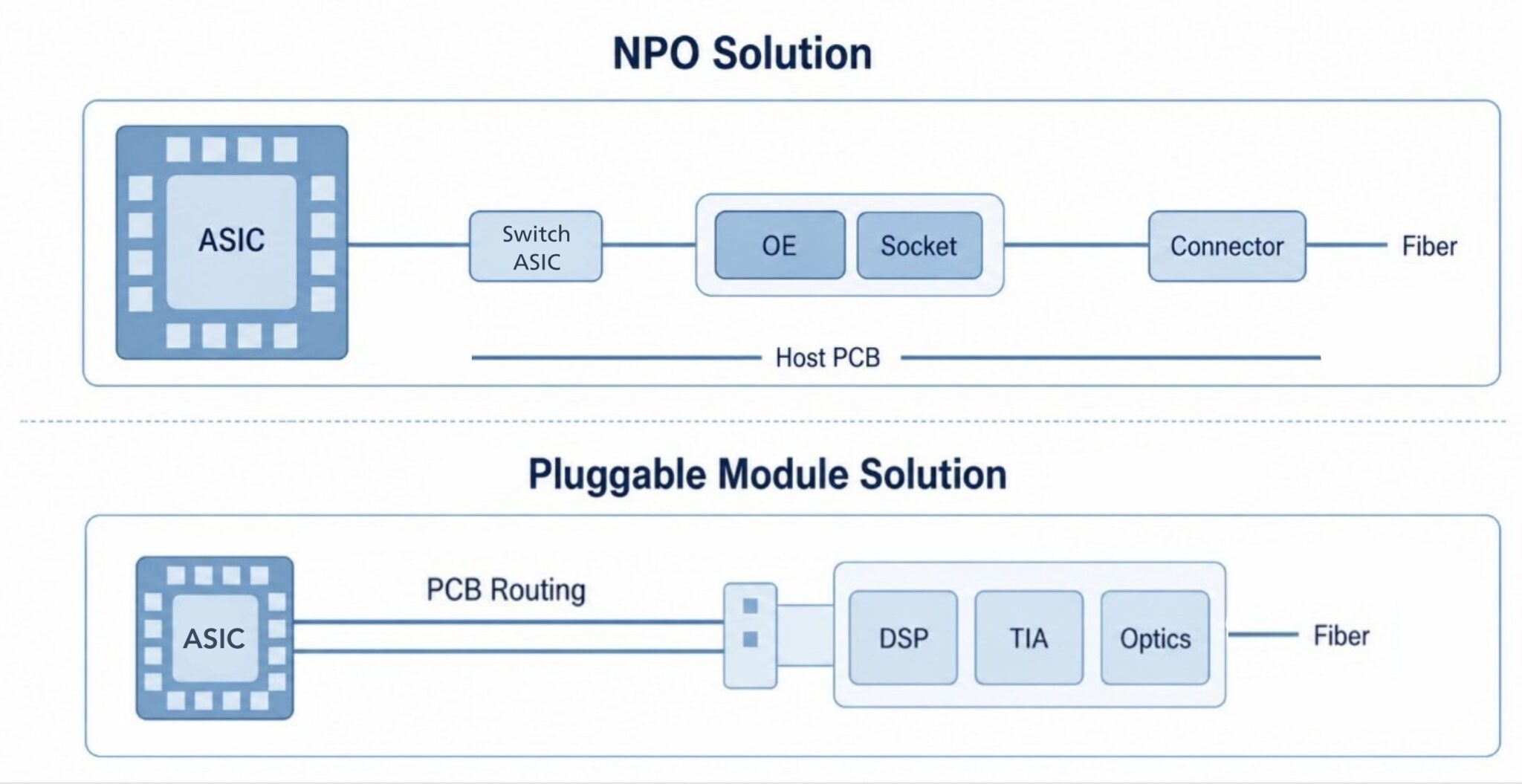
NPO (Near-Packaged Optics) is essentially a high-speed optical interconnect architecture located between traditional pluggable optics and CPO. The core idea of NPO is to move the optical module from the switch front panel closer to the switch ASIC, so the transmission distance of high-speed electrical signals inside the PCB can be greatly reduced. In an NPO architecture, the Optical Engine is directly mounted inside the switch PCB and deployed near the ASIC area. Communication between the ASIC and the optical engine requires only several centimeters of high-speed electrical connection, rather than traditional long-distance PCB traces.
NPO repackages the optical devices that originally existed inside traditional optical modules into onboard optical engines. Core components such as lasers, drivers, TIAs, modulators, and photodetectors still exist, but they are no longer located inside front-panel pluggable modules. Instead, they are integrated into a Near-Packaged Optical Engine mounted on the PCB. Optical fibers are then routed from inside the switch to the front-panel area. By shortening the electrical connection distance, NPO can significantly reduce channel loss. This greatly improves signal integrity while reducing system dependence on heavy DSP compensation.
High Bandwidth and Low Loss
One of the biggest advantages of NPO optics is the ability to significantly shorten the path of high-speed electrical signals. NPO only requires several centimeters of high-speed electrical connection to complete data transmission between the ASIC and optical engine. This greatly reduces insertion loss, crosstalk, and reflection problems, improving the signal integrity of the whole system.
Better Power Efficiency
Because the high-speed electrical connection becomes much shorter, the system no longer requires extremely strong DSP compensation and driving capability. As a result, NPO can significantly reduce overall system-level power consumption.
Better Thermal Design
Unlike CPO, which places optical devices very close to the ASIC package, NPO still keeps the optical engine independently packaged. This means optical components are not directly exposed to the extremely high heat generated by the ASIC. As a result, wavelength drift and performance fluctuations can be reduced, and the thermal structure of the entire system becomes more flexible. Compared with CPO, NPO is easier to deploy in real engineering environments.
Higher System Density
Traditional QSFP-DD and OSFP modules require complete front-panel cages and pluggable structures, while NPO moves the core optical engine onto the PCB itself. This releases more front-panel space and reduces the physical limitations caused by large mechanical structures.
NPO vs Pluggable Optics vs CPO
| Pluggable Optics | NPO | CPO | |
|---|---|---|---|
| Optical Engine Position | Front panel module | Near ASIC on PCB | Inside ASIC package |
| Electrical Trace Length | Long | Short | Extremely short |
| Signal Integrity | Moderate | High | Very high |
| Power Consumption | High | Lower | Lowest |
| Maintenance Flexibility | Excellent | Moderate | Difficult |
| Port Density | Limited | High | Very high |
| Packaging Complexity | Low | Medium | Very high |
Although CPO currently has the highest discussion level in the industry, many vendors consider NPO a more practical solution. Even though CPO can provide the highest integration level and lowest power consumption, it also introduces extremely high packaging complexity. NPO does not require a complete redesign of the switch architecture, unlike CPO. It retains an independent, field-replaceable optical engine compatible with current optical fiber connector standards, making it easier for vendors to adopt during the transition to higher-speed AI networks.
Future Development and Limitations of NPO
- In Hyperscale Data Centers: Because small savings in watts per port add up to big savings in energy consumption, an increasing number of hyperscale operators are considering NPO for its power efficiency and density.
- In HPC (High-Performance Computing): Since HPC requires very high performance in terms of bandwidth, latency, and synchronization, NPO optics with short-distance, high-speed electrical links will improve signal integrity, making it highly applicable to future HPC networking.
- For Next Generation 800G/1.6T Switching Platforms: With continuous development of 224G SerDes technology, keeping good signal integrity in pluggable modules will continue to be a significant challenge. In the future, NPO will become the standard for next-generation high-end switching platforms.
At the same time, OPTCORE stays up to date with the latest technological innovations in the optical devices industry and provides high-quality products and stable services.
-
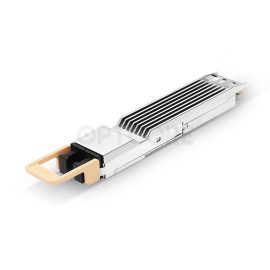
Generic OSFP-800G-DR8 Compatible 800G 2xDR4/DR8 OSFP Finned Top 1310nm 500m Dual MPO-12/APC Transceiver
US$ 899.00 (Excl. VAT) -
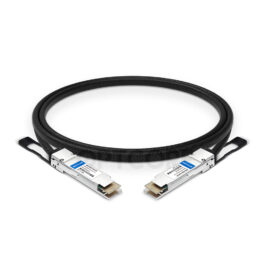
0.5~2m Generic QDD-800G-DAC Compatible 800G QSFP-DD DAC Cable
Price range: US$ 119.00 through US$ 199.00 (Excl. VAT) -
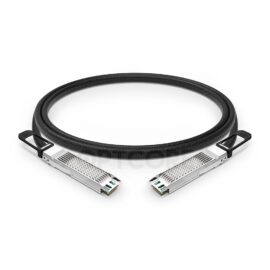
0.5~2m Generic OSFP-800G-DAC Compatible 800G OSFP Finned Top DAC Cable
Price range: US$ 99.00 through US$ 159.00 (Excl. VAT) -
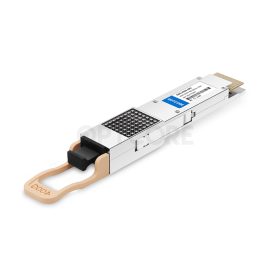
Generic QSFPDD-400G-SR8 Compatible 400GBASE-SR8 QSFP-DD 850nm 100m Transceiver
US$ 139.00 (Excl. VAT)
Requirements for changes to the entire switch architecture
One important thing must be clearly understood: NPO is not simply replacing optical modules. The entire switch architecture changes together with it. In a traditional pluggable structure, the optical module is located on the front panel. The ASIC is near the center of the PCB, and both are connected via long PCB traces. NPO places the optical engine directly next to the ASIC, so the PCB layout, power system, thermal design, and high-speed routing of the switch all need to be redesigned. This means deploying NPO optics is not as simple as replacing modules alone. The entire switch platform itself must support the NPO architecture.
It is also important to note that NPO is no longer only a concept. More and more switch vendors and optical component manufacturers are already demonstrating real NPO products. Examples such as 800G DR8 NPO Optical Engines, 1.6T NPO interconnect solutions, and AI Fabric NPO switching platforms are already appearing at optical communications exhibitions like OFC 2025. Many companies now view NPO as a key future direction for AI data centers.
Limitations
NPO still has several limitations. Compared with traditional pluggable optics, maintainability becomes lower. Compared to the CPO, which has taken this to the extreme, NPO still contains some PCB electrical traces even though the connection distance is already much shorter. In addition, the current NPO optics ecosystem and industry standards are still developing, and compatibility and interoperability among vendors need further improvement. Overall, NPO is more like a realistic solution that balances high performance, low power consumption, and engineering complexity.
FAQs
#1 What is the main purpose of NPO?
NPO mainly aims to shorten the electrical path between the switch ASIC and the optical engine.
#2 Is NPO still using optical transceivers?
Yes. They are just repackaged into onboard optical engines near the ASIC instead of traditional pluggable modules.
#3 Is NPO hot-pluggable like QSFP or OSFP modules?
Usually no. Most NPO optical engines are soldered or mounted directly on the PCB, so they are not designed for normal front-panel hot-plug replacement like traditional pluggable optics.
#4 Is NPO replacing CPO?
No. NPO is usually considered a middle solution between traditional pluggable optics and CPO. It improves efficiency and signal integrity without the extreme packaging complexity of full co-packaged optics.
Conclusion
The appearance of NPO represents the continuous development and improvement of the optical device industry. It is always trying to improve performance and efficiency. For network architects and data center operators, understanding and planning this transition is no longer optional. It is necessary to stay competitive. NPO optics balances high efficiency and controllable complexity, and it is expected to become a mainstream architecture for high-performance switches in hyperscale data centers and HPC environments.
Read more:
- What is the LRO Transceiver? The Simple Guide to Linear Receive Optics
- What is an LPO Transceiver? A Beginner’s Guide to Linear-drive Pluggable Optics
- NVLink vs. PCIe: Understanding The Differences
