


 Optical Transceiver
 DAC/AOC Cable
 Fiber Cabling
 Networking
Blog, Optical Transceiver
What is an LPO Transceiver? A Beginner’s Guide to Linear-drive Pluggable Optics

May
Thanks to the rapid growth of 5G and artificial intelligence, the optical transceiver industry is also advancing rapidly. New technologies that differ from traditional optical modules have gradually emerged. LPO transceivers are one of them. They mainly target the high power consumption problem associated with modern high-speed optical modules, such as 400G and 800G. To address this issue, LPO transceivers optimize this aspect of the design, greatly improving both efficiency and performance.
This article provides a detailed introduction to this type of transceiver. From principles to applications, and compares it with traditional optical modules.
Challenges Currently Facing Optical Transceivers
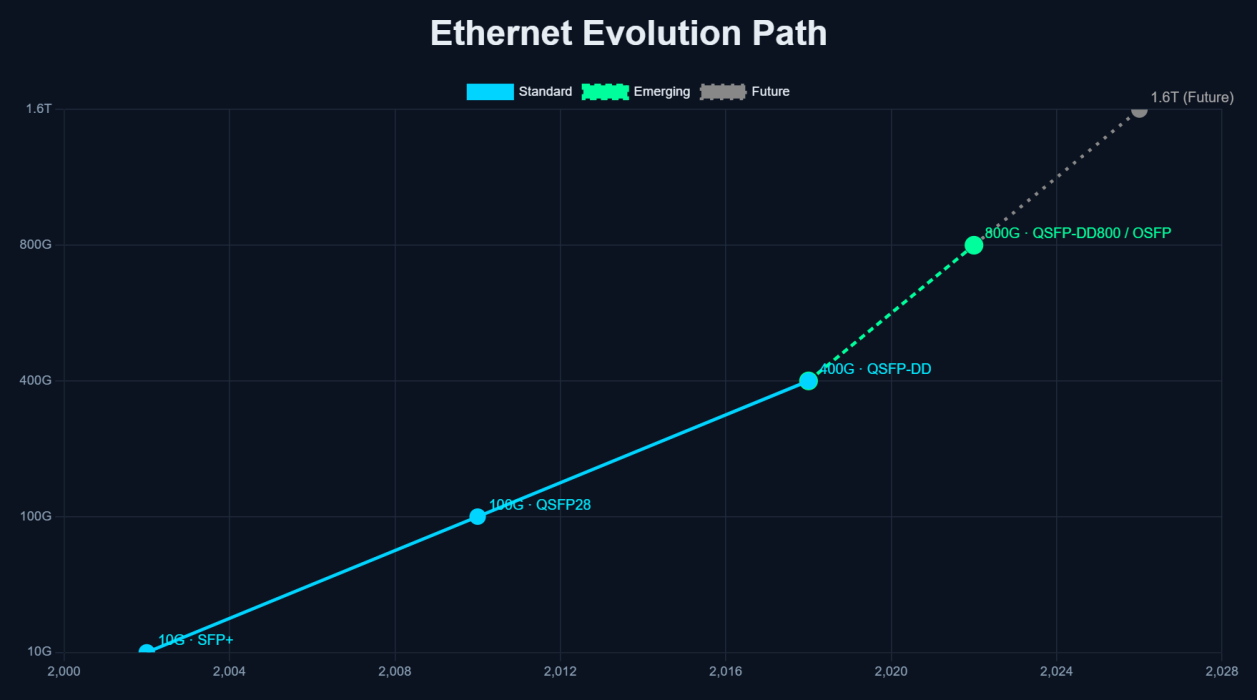
After moving from the 10G NRZ era into the 400G and 800G PAM4 era, the power consumption of optical transceivers increased rapidly. Today, many 800G modules already consume more than 20W, and some even more than 30W. Compared with 2010, the total power consumption of modern data center networking equipment has increased by dozens of times, and high-speed optical modules themselves have become one of the major heat sources in the whole system. This makes power and thermal control a key problem in modern networks.
What is a DSP Chip
DSP (Digital Signal Processing) is a high-speed digital signal processing chip. During high-speed signal transmission, obvious insertion loss, jitter, and signal attenuation can easily occur. DSP continuously restores and compensates for these distortions to maintain a normal bit error rate in the system. It mainly handles functions such as Retiming, Equalization, Forward Error Correction (FEC), dispersion compensation, and Gearboxing.
Retiming restores the timing relationship between clock and data after a signal offset occurs. Equalization compensates for high-frequency loss in high-speed links. FEC detects and repairs some transmission errors during data transfer.
However, these capabilities also bring clear disadvantages. DSP is an advanced-process high-speed chip with very high power consumption and heat generation. In many 400G modules, a single 7nm DSP chip already consumes around 4W, which is close to half the module’s total power consumption. At the same time, DSP also greatly increases module cost because it has become one of the most expensive parts in the BOM of modern high-speed transceivers. In addition, because all data must pass through DSP for reprocessing, it introduces extra link latency, which directly affects overall performance.
What is an LPO Transceiver
LPO (Linear-drive Pluggable Optics) uses a completely different design idea from traditional optical modules. LPO mainly uses a Linear Driver and a Linear TIA to amplify signals linearly, rather than using a complex DSP to fully recover them digitally. It tries to preserve the original signal condition as much as possible and to reduce the number of digital processing stages.
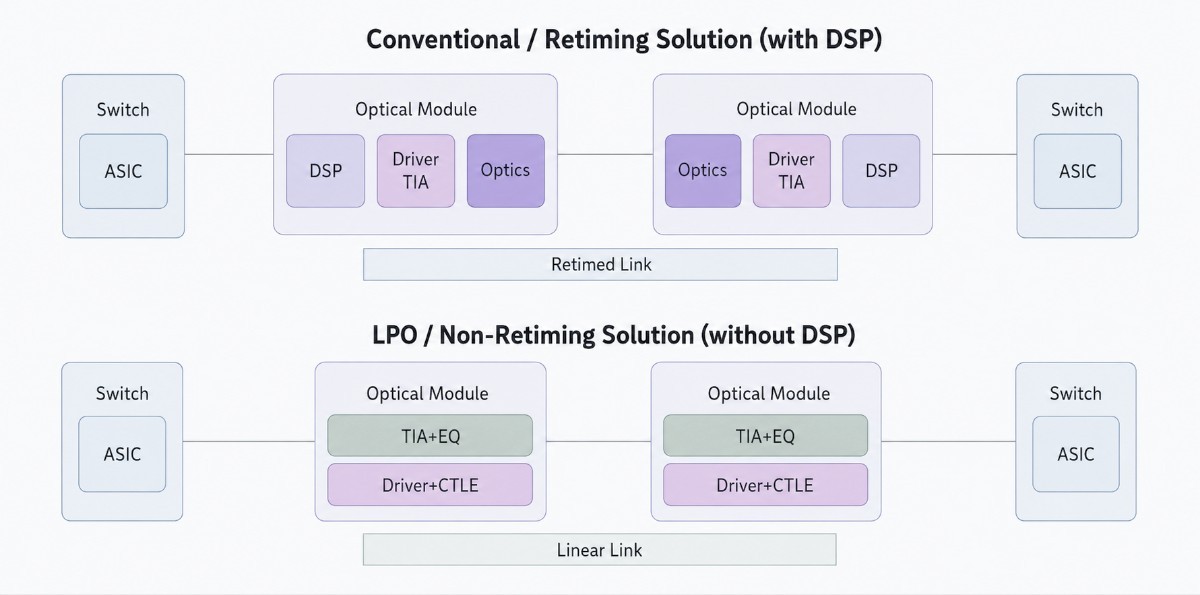
Because DSP is removed or greatly simplified, the internal structure of an LPO transceiver becomes much simpler. The biggest advantage of this structure is lower power consumption. A traditional 800G DSP-based module may consume more than 13W, whereas an 800G LPO transceiver typically reduces power consumption to around 4W. At the same time, because the number of DSP processing stages is reduced, link latency is significantly lower.
However, LPO is not without trade-offs. Because DSP functions are reduced, LPO relies much more on the host ASIC’s SerDes capability. The switch chip must have stronger equalization and error-recovery capabilities. At the same time, because there is no full DSP compensation, LPO is usually more suitable for short-distance scenarios and is not ideal for complex long-distance links or network environments with poor signal quality.
Specifications
- Reduced DSP usage with much lower power consumption, usually around 4W
- Lower link latency
- Keeps the traditional pluggable transceiver structure for easier maintenance
- Lower heat generation and easier high-density deployment
- Reduces overall data center power and cooling pressure
- Simpler internal module structure, making high port density easier
Limitations
- More dependent on the SerDes capability of the switch ASIC
- Transmission distance is usually shorter than traditional DSP modules.
- Higher requirements for PCB layout and overall signal integrity
- Interoperability between vendors is still developing
LPO vs Traditional Optical Transceivers
| Traditional DSP Transceiver | LPO Transceiver | |
|---|---|---|
| DSP Chip | Required | Removed or simplified |
| Typical 800G Power Consumption | 13W–18W or higher | Around 4W–8W |
| Latency | Higher | Lower |
| Signal Recovery Capability | Strong | More dependent on host ASIC |
| Transmission Distance | Longer | Usually shorter |
| Heat Generation | Higher | Lower |
| Structure Complexity | More complex | Simpler |
Although LPO has clear advantages in power consumption and latency, it will not completely replace traditional DSP modules. Traditional DSP-based modules still offer stronger link-recovery capability and more mature compatibility. And they are still very important in long-distance links, complex network environments, and multi-vendor deployments. Because many signal-processing functions have been moved to the switch ASIC, LPO also imposes much higher requirements on the host ASIC, PCB design, and system tuning.
Key Applications and Deployment Scenarios of LPO Transceivers
- Data Center ToR-to-Leaf Switch Interconnects: In large cloud data centers, most links between ToR switches and Leaf switches are within 100 meters. This environment usually already has good signal integrity. So LPO can fully show its low-power advantages while reducing overall rack thermal density and cooling pressure.
- GPU Interconnects Inside AI Training Clusters: 400G and 800G high-speed links are commonly deployed between GPU servers and GPUs. These environments are very sensitive to latency and power consumption. So LPO is well-suited for deployment within AI GPU fabrics.
- High-density Hyperscale Data Centers: In hyperscale data centers, saving only a few watts per module can add up to a significant energy difference across thousands of ports. LPO can significantly reduce power supply and cooling costs, so it is receiving more attention from hyperscale data centers.
- As a Transition Solution Before CPO: Although CPO can further reduce power consumption, it fundamentally changes traditional switch architectures and increases maintenance complexity. In comparison, LPO still maintains the pluggable architecture. So many vendors view it as an important transition solution before CPO, reducing system power consumption without changing existing maintenance logic.
As AI networking and 800G high-speed interconnects continue to develop, Optcore is also continuously paying attention to high-speed optical transceivers. Continuously optimize low-power, high-density, and high-speed interconnect capability to help users build more efficient and stable data center networks.
-
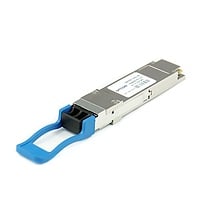
Generic Compatible 400G FR4 QSFP-DD 1310nm 2km LC Transceiver
US$ 459.00 (Excl. VAT) -
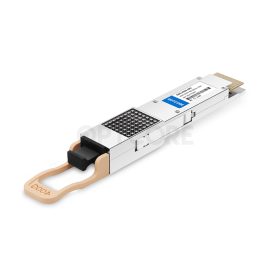
Generic Compatible 400G DR4 QSFP-DD 1310nm 500m MTP/MPO-12 Transceiver
US$ 429.00 (Excl. VAT) -
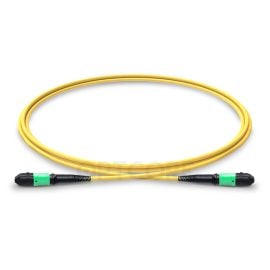
Single Mode OS2 MPO to MPO Trunk Cable, 12 Fiber, Female, Type B, LSZH
Price range: US$ 22.00 through US$ 104.00 (Excl. VAT) -
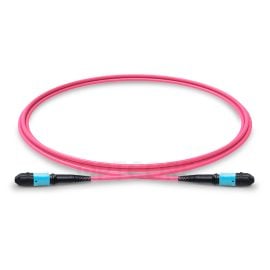
Multimode OM4 MPO to MPO Fiber Trunk Cable, 12 Fiber, Female, Type B, LSZH
Price range: US$ 21.10 through US$ 283.50 (Excl. VAT)

FAQs
#1 Is LPO applicable for long-distance optical transmission?
Usually not. LPO technology is primarily used for short-distance, high-speed interconnections.
#2 Can I directly substitute a traditional DSP module for an LPO one?
Maybe not. The demand for host ASICs is much higher for LPO technology. Before deployment, it is necessary to ensure the compatibility between the switch ASIC, the board layout, and the firmware environment.
Conclusion
The optical transceiver industry is continually evolving, and the emergence of LPO transceivers reflects this trend. Linear-drive technology replaces complex DSP processing with a simpler, pluggable optical structure, resulting in lower power consumption and cost. If you are looking for a low-power, low-latency solution that is also suitable for future AI network expansion, choosing an LPO transceiver compatible with your existing deployment environment is a very worthwhile option.
Read more
- Understanding 400G DR4 Optical Transceiver: A Complete Guide
- 400G SR4 vs DR4 vs FR4 vs LR4: What Are the Differences and How to Choose?
- MPO-8, MPO-12, or MPO-24? Choosing the Right Backbone for Your 400G Infrastructure
