






Optical Transceiver
Grey Transceiver vs. Color Transceiver, What is the Difference?

Jul
If you are a network maintenance engineer or technician, you should know the term optical transceiver. But have you ever heard of gray and color optical transceivers? Do you know what they mean? And what are the differences between them? Now we are going to talk about this topic.
First, let’s start with a grey transceiver.
What is a grey transceiver?
A grey transceiver is an optical transceiver that only uses one or two wavelengths of light to transmit and receive data. The grey transceiver is not color-coded because it only uses one wavelength of light. The most common wavelengths used by grey transceivers are 850nm, 1310nm, and 1550nm.
In these terms, “grey” is a euphemism for an optical transceiver that is regular, simple to obtain, reasonably priced, and implies “uncolored”. So, in most cases, a grey transceiver is a standard transceiver.
For example, the most popular 1000BASE-SX, LX, EX, and ZX SFP transceivers are the typical grey transceivers; they all transmit and receive data at 850nm, 1310nm, or 1550nm.
What is a color transceiver?
A color transceiver is an optical transceiver that uses multiple wavelengths of light to transmit and receive data. Color transceivers are color-coded because they use multiple wavelengths of light.
Like the CWDM and DWDM transceivers, they are typical color transceivers that transmit and receive data at multiplane wavelengths.
Another example is the 40G QSFP+ LR4, which features four different wavelengths and then multiplex the different wavelengths in one fiber. In other words, it also utilizes CWDM technology. So, in this case, the QSFP+ LR4 is also a color transceiver.
The color in this concept refers mainly to the wavelength; you should not be confused with the “color” of the latch. The color of the pull ring is just for easy identification, even though it is also related to the wavelength. The two “colors” are different things. Please don’t mix them up.
For example, the 1310nm SFP transceiver usually with blue latch, but it is not a color transceiver optics; it is still a standard grey transceiver.
Gray vs. Color Optical Transceiver, what is the difference?
Now let us compare grey transceivers with color transceivers. The below table lists their similarities and differences.
| Comparison | Grey Transceiver | Color Transceiver |
| Wavelength | 850nm, 1310nm, 1550nm or BiDi Wavelength | CWDM Wavelength (1270~1610nm), DWDM Wavelength (C1~C80) |
| Media Type | SMF or MMF | SMF |
| Application Scenarios | Ideal for customer-side short-distance transmission | Ideal for line side long-distance transmission |
| Category | Standard SFP, SFP+, SFP28, QSFP+, QSFP28 Transceiver | CWDM and DWDM Transceiver |
| Protocols | ITU-T G.957, ITU-T G.959.1, IEEE 802.3 | ITU-T G.694.1 (DWDM), ITU-T G694.2(CWD) |
| Pros | Lower Power and Lower Cost | High bandwidth and Save Fiber |
| Cons | Low bandwidth scalability | High cost |
| Pricing | Typical Lower | Typical Higher |
Optcore Grey transceiver and Color transceiver solution
If you want to buy a grey transceiver or color transceiver, look no further than Optcore. Optcore supplies various kinds of grey and color transceivers for your one-stop buying need.
Below is a table listing our grey transceiver and color transceiver categories.
| Grey Transceiver | Color Transceiver |
| 1G SFP Transceiver | 1G CWDM SFP Transeiver |
| 2.5G SFP Transceiver | 1G DWDM SFP Transeiver |
| 10G SFP+ Transceiver | 2.5G CWDM SFP Transeiver |
| 25G SFP28 Transceiver | 2.5G DWDM SFP Transeiver |
| 40G QSFP+ Transceiver | 10G CWDM SFP+ Transeiver |
| 100G QSFP+ Transceiver | 10G DWDM SFP+ Transeiver |
| 1G BiDi SFP Transceiver | 25G CWDM SFP28 Transeiver |
| 10G BiDi SFP+ Transceiver | 25G DWDM SFP28 Transeiver |
| 25G BiDi SFP28 Transceiver |
-
 Generic Compatible C17-C61 10GBASE-ER DWDM SFP+ 40km TransceiverUS$ 129.00 (Excl. VAT)
 -
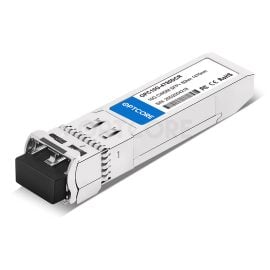 Optcore 10Gb/s CWDM 1470~1610nm 80km SFP+ ZR TransceiverUS$ 169.00 (Excl. VAT)
 -
 Generic SFP-10G-DWDM-ZR-xx.xx Compatible 10G DWDM SFP+ 80km TransceiverUS$ 159.00 (Excl. VAT)
 -
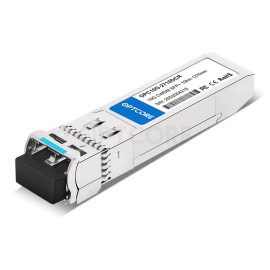 Optcore 10Gb/s CWDM 1270~1610nm 10km SFP+ LR TransceiverPrice range: US$ 36.00 through US$ 49.00 (Excl. VAT)
Final Words
After reading this article, I hope you can have a clear understanding of the grey transceiver and color transceiver. And you should know grey transceivers are standard transceivers that transmit and receive data at one or two wavelengths, while color transceivers are those that send and receive data at multiple wavelengths.
If you want to purchase a grey or color transceiver, please don’t hesitate to contact Optcore. We will be delighted to help you find the ideal transceiver for your requirements.
Read more:
- Do You Know the CWDM Transceiver Color Code?
- CWDM Wavelength ITU Channels List: A Complete Guide
- DWDM Wavelength ITU Channels Chart: A Complete Guide
- OPTCORE Best 10G CWDM SFP+ Transceiver Solution
