


 Optical Transceiver
 DAC/AOC Cable
 Fiber Cabling
 Networking
Blog, Optical Networking
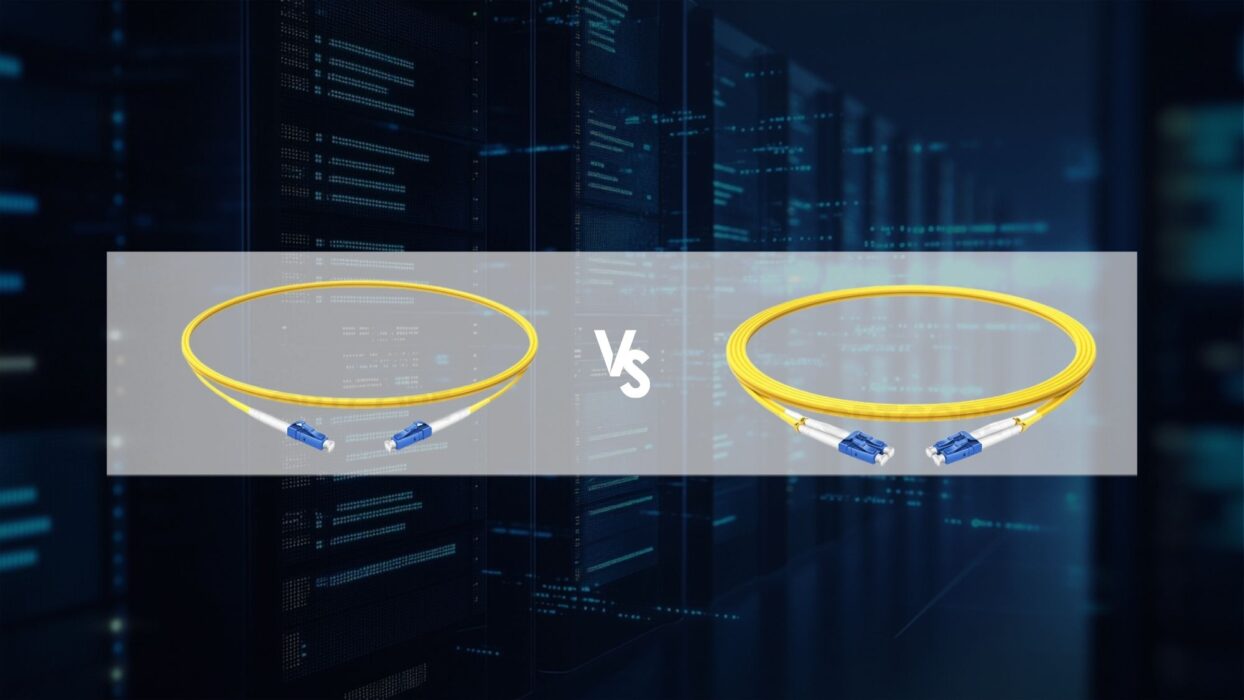
Simplex vs. Duplex Fiber Cable: What Are the Differences & When to Use Which?
May
Faced with simplex vs. duplex fiber cables, many engineers and purchasers are confused. What does it mean? More importantly, when you use a single-fiber optical cable, do you need to switch it to a dual-fiber cable? This systematically organizes definitions, core differences, and alternative perspectives to help you make more accurate decisions.
Table of contents
What is A Simplex Fiber Cable?
A simplex fiber-optic cable contains a single optical fiber and a single optical fiber connector at one end. The most common form is a single-strand optical cable with one end SC and the other LC.
However, this does not mean that single-fiber optical cables are limited to single-pass scenes. Using wavelength-division multiplexing, the same optical fiber can carry optical signals of different wavelengths, for example, 1310 nm in the up direction and 1490 nm or 1550 nm in the down direction. Thereby enabling single-fiber two-way communication. However, this capability is provided by the optical module and the passive wavelength-division device, and the cable’s physical attribute remains a single fiber. So, when discussing jumper choices, note the physical forms of connectors, cables, and fiber-optic cores.
Recommended products
-
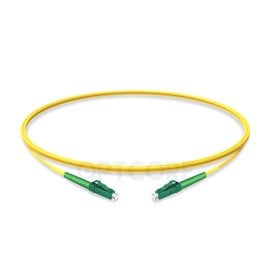
LC-LC APC 9/125 OS2 Singlemode LSZH Simplex Fiber Patch Cable
Price range: US$ 1.70 through US$ 6.20 (Excl. VAT) -
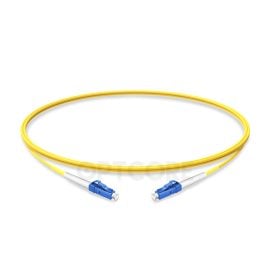
LC-LC 9/125 OS2 Singlemode LSZH Simplex Fiber Patch Cable
Price range: US$ 1.90 through US$ 5.90 (Excl. VAT) -

Generic SFP-10G-BX10-U Compatible 10G SFP+ BiDi 1270nm-TX/1330nm-RX 10km Transceiver
US$ 16.00 (Excl. VAT) -

Generic SFP-10G-BX10-D Compatible 10G SFP+ BiDi 1330nm-TX/1270nm-RX 10km Transceiver
US$ 16.00 (Excl. VAT)
What is A Duplex Fiber Cable?
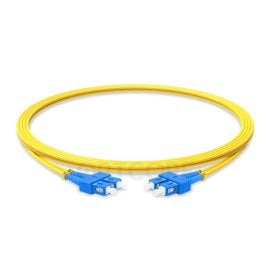
A dual fiber-optic cable is an optical fiber assembly that includes two optical fibers, typically connected in parallel to form a “double connection” structure. Both ends are usually dual-duplex, dual-SC, dual-ST, etc. According to the principle of operation, the division of these two optical fibers is clear: one transmits data, and the other receives it. As a result, both communication can be transmitted and received simultaneously, enabling full-duplex, real-time dialogue.
There are two main physical structures for dual fiber-optic cables. One adopts a GYTC8A or a double-parallel structure. The two single optical cables are connected together at the sheath and cannot be disassembled. The other is to use a double clip to mechanically couple two independent single jumpers to form a double component. The latter advantage is flexible, but in a harsh environment, the molded structure is highly reliable.
In both formats, the duplex cable must address the critical issue of polarity. For this reason, in the industry, the A-B polarities are defined. It means the sender needs to match the receiver.
Recommended products
-
LC-LC 9/125 OS2 Singlemode LSZH Duplex Fiber Patch Cable
Price range: US$ 2.40 through US$ 27.50 (Excl. VAT) -
SC-SC 9/125 OS2 Singlemode LSZH Duplex Fiber Patch Cable
Price range: US$ 2.60 through US$ 27.50 (Excl. VAT) -

Generic SFP-10G-SR Compatible 10GBASE-SR SFP+ 850nm 300m Transceiver
US$ 7.80 (Excl. VAT) -
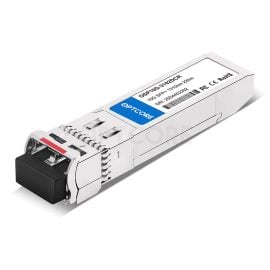
Generic SFP-10G-LRM Compatible 10GBASE-LRM SFP+ 1310nm 220m Transceiver
US$ 13.00 (Excl. VAT)

Simplex vs. Duplex Fiber Cable: What are the Differences?
From the basic definition, the difference between simplex vs. duplex fiber cables is clear. Therefore, in actual projects, it is necessary to compare them across multiple dimensions to better understand the application boundaries.
| Comparsion | Simplex fiber cable | Duplex fiber cable |
| Number of fiber cores | 1 | 2 |
| Data transmission direction | Physical Unidirectional Transmission | Physical bidirectional full duplex |
| Connector Type | Single connector | Dual connector |
| Cost | The price of a single piece is low, but building a two-way structure requires two pieces | The price of a single unit is usually slightly lower than the sum of two simplex fiber cables |
| Upgrade and flexibility | Can be freely combined into duplex | Plug and Play, but the flexibility is lower than that of a simplex one. |
| Device port matching | Suitable for simplex optical ports, BiDi modules, PON modules | Suitable for standard duplex optical ports, matched with SFP/SFP+ and other transceivers |
Transmission Types
A simplex fiber-optic cable supports unidirectional transmission without additional wavelength-division multiplexing equipment, whereas a duplex fiber-optic cable supports bidirectional full-duplex transmission by default. This difference directly determines the direction of selection for different application scenarios.
Fiber Core Number
It changes the outer diameter of the optical fiber cable. In single-wire cables, there is only one fiber core; in double-wire cables, there are two fiber cores. This makes the single-wire jumper cable thinner than usual, bent, and narrow enough to fit inside a narrow wire slot.
Connector Types
A single-head jumper uses a single connector, such as LC, SC, or FC; a duplex jumper uses a duplex connector, such as LC duplex. In practice, two LC plugs are combined into a single housing or clip, but when the device is inserted, the duplex port is occupied. It should be noted that many dual optical ports appear rectangular. While the upper and lower positions correspond to transmission and reception, respectively, the dual connector must be aligned simultaneously to prevent it from being plugged back in. It is not only necessary to identify the polarity of the two single connectors but also to ensure they are not loose due to a mechanical mismatch.
Physical Form and Ease of Management
The single-work jumper lines are completely independent, and the two single wires must be tied or pulled separately. The polarity is artificially differentiated by label color, which can lead to misconnections during maintenance. The double jumper allows two or more optical fibers to be transmitted and received as a single unit through the tube, even when the tube is removed. In particular, in the presence of several hundred shelves, the order of double jumpers is not sufficient for single unions.
How to Choose Each
To take on concrete projects, you must make decisions based on a clear idea.
#1. Check the Optical Interface Type of Both Devices
Open the optical module specification or look at the device port. If you have an “LC duplex,” “SC duplex,” or a dual-port device, you need to select a dual-fiber optical cable. If the port is an LC simplex or has only one optical fiber, such as a long-distance BiDi SFP module, a PON module, or an industrial transceiver, it must support a single-fiber cable. The device interface determines the physical shape and cannot be forcibly mixed, which is a requirement for hardness.
#2. Bidirectional Communication
If a typical Ethernet switch interconnects, server access, and data flow are bidirectional and concurrent, you need to select a duplex optical fiber cable. If the application scene is a one-way broadcast, for example, it’s only the push of a video signal to a large screen. The image feedback is from the camera alone. The backlight controls are not required; the single fiber-optic cable can be used in full, saving on the cost of optical fiber wiring. In addition, when single-fiber communication is implemented over a single optical fiber, it is necessary to use a combination of “single fiber optic cable + bidi optical module” instead of a double jumper. The determination in this case is the selection of the optical module, and the jumper selects the single-mode accordingly.
#3. The Building Where the Fiber is Laid up
There is only one core from the panel to the machine room, but to avoid rebuilding, a single-fiber bidirectional plan is adopted. In new construction, during the design stage, it is necessary to pre-embed two-core optical cables at each information point to ensure maximum flexibility. Then, the double jumper is used in the design stage. There is a margin regardless of whether a traditional exchange is performed or a single-core is used for a single purpose. For a mechanical chamber intended to expand while the fiber-optic resource is under tension, the double jumper clearly requires two-core-free optical fibers. But the double jumper and the bidi module can quickly double capacity, which is a very practical remodeling strategy.
#4. The Total Costs
The data center maintenance center is expected to have all connectors unified with clear polarity, making insertion difficult. In this situation, the dual LC jumper is used for standardization and has a built-in blur-prevention mechanism and polarity label. These can be used to significantly reduce artificial faults.
Sometimes, even if you need to use a single fiber, you can buy a single-power jumper with a duplex clip and temporarily configure a duplex connection. But this method increases asset-management complexity. In an industrial environment, there is significant vibration and dirt, and the single-process connector is structurally simpler and provides a more independent connection.
#5. Inventory Management
The SKU may expand by purchasing a large number of single- and double-jumpers simultaneously. Some companies choose to store only single jumpers and double clips. From using double-bind as needed on the spot, this flexible approach is suitable for small-scale networks. On the other hand, in large data centers, it is often possible to purchase dual-jumper products that have been rigorously tested for polarity. This enables plug-and-play consistency and reduces the risk of human error during assembly, at the expense of slight flexibility.
Conclusion
The duplex optical fiber cable is standard equipment for bidirectional full-duplex communication and provides improved polarity and management. Simplex vs. duplex fiber cable: when we choose, we can always determine which device to use based on the four levels of device interfaces, communication needs, fiber-optic resources, and maintenance strategies. It is the best connection for the scene, whether single or double.
Read more
- MPO/MTP® Jumper, Harness, and Trunk Cables: What Are the Differences and How to Choose?
- What Is Fiber Patch Panel: A Beginner’s Guide
- FBT Splitter vs. PLC Splitter Comparison: What is the difference? (2026)
