


 Optical Transceiver
 DAC/AOC Cable
 Fiber Cabling
 Networking
Blog, Network Cabling
Perpetual PoE vs. Fast PoE: Understanding The Difference
May
Power over Ethernet (PoE) technology has completely changed how network devices are powered. As network infrastructure becomes increasingly complex, PoE technology has evolved, and two standards, such as perpetual PoE vs. fast PoE, serve different purposes. Both focus on addressing continuity and reliability issues in power supply, but they tackle different challenges in different scenarios. This article provides clear references to business operators from three dimensions: technical principles, application scenarios, and industrial value.
Table of contents
What is perpetual PoE?
If you need to reboot the PSE (power sourcing unit) switch, the traditional switch temporarily interrupts power to all PoE ports during startup, regardless of whether the reboot is due to a firmware upgrade, a configuration change, or an unexpected system reset. This means that the connected IP camera, wireless access point (AP), IP phone, and other receiving devices (PDs) reboot, and the whole process takes several minutes. During this time, a blind spot in the monitoring system caused the wireless network to be interrupted, paralyzing important communication.
The perpetual PoE has fundamentally changed this aspect by separating PoE power control and switching the main operating system. When the switch enters the restart process, the perpetual PoE function continues to maintain the power output of each port on the POE feed chip, while the PD device maintains the power supply and ensures continuous power delivery.
The perpetual power does not guarantee complete uninterruptible power in every scene. For example, if a switch upgrades the firmware of a PoE microcontroller (MCU), the PoE controller itself must be restarted, and the power supply is temporarily interrupted, but it usually recovers as soon as the upgrade is complete. Also, in a power-stack-switch environment, the expected performance of the perpetual PoE function may be affected by overall power-budget constraints.
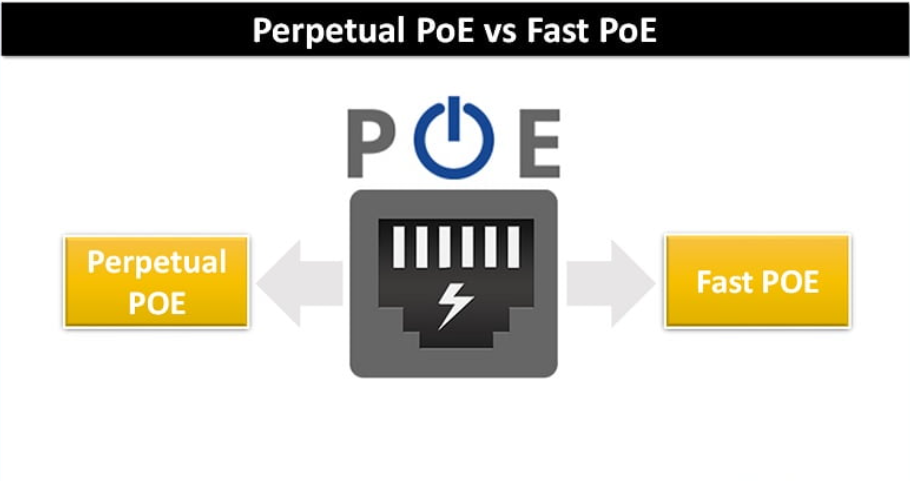
Figure 1: Perpetual PoE vs. Fast PoE
What is fast PoE?
According to the normal boot process, when the switch is powered on, it must complete a series of steps, including loading the bootloader, booting the operating system kernel, loading the PoE configuration, and detecting the port state. The PD device may need to wait 2-5 minutes for the power supply to recover. After a fast PoE, the switch reads the previously stored PoE feed-state information during startup, recovers the previously fed port power output, and compresses recovery time to about 15 to 20 seconds. In short, PoE’s “fast” is faster than “fully resuming power supply after fully starting.”
Perpetual PoE vs. Fast PoE: the differences
| Comparison | Perpetual PoE | Fast PoE |
| Power supply method | Continuous power supply during main system restart | Pre-save the power supply status and restore it upon power-on |
| Applicable triggering scenarios | Planned maintenance: firmware upgrade, configuration change, software restart | Pre-save the power supply status and restore it upon power-on |
| User experience | PD devices are completely insensitive, with zero business interruption | PD device briefly loses power, then quickly recovers |
| Technical implementation method | The power supply plane and forwarding plane are separated, and the PoE controller operates independently | Pre-save the power supply status and restore it upon power on |
| Power restoration time | No interruption | It depends on the power supply |
From the perspective of actual placement and industry observation, I have very personal judgments about these two technologies: The perpetual PoE represents idealism, and the fast PoE represents pragmatism, but the truly wise way is to bind both.
The charm of perpetual PoE is to achieve a “seamless experience.” Imagine. When network administrators remotely upgraded switch firmware late at night, the surveillance camera did not blink, the factory’s production line did not stop, and those working overtime in the office didn’t feel any network disruptions; such reliability is the true value of the enterprise network. However, the limit is also clear.
It can only respond to the “active reboot” scenario, but in fact, the substantial part of power supply failures is an unexpected blackout, a trip, or the accidental removal of electrical power cables. In these cases, the perpetual PoE is completely powerless. This is because its actions depend on a continuous power supply. In other words, like a sophisticated key that can prevent the rotation of the master’s own key, the whole door cannot be removed.
The fast PoE, without pursuing the ultimate elegance of “without interruption,” accepts the reality that “power failure is sure to happen” and emphasizes minimizing damage. Restarting the power supply within tens of seconds does not require complex hardware decoupling or independent power-supply control logic from an operational standpoint. In many scenes, the 15-second and 2-minute breaks have different impacts on the business. Fast PoE has solved the most frequent and most frustrating problem: after the power outage, all the equipment is recovering slightly, and the service staff waits.
Even if the switch side insists that “power supply is not interrupted,” it will recover quickly. Even if the edge jumper’s contact resistance is too high or the wiring shelf terminal is oxidized, the ideal power supply control logic is compromised by the physical link. This is a very undervalued part of many designs. Don’t look only at the switch list. You also have to look back to see whether these parts align with the level of confidence you expect.
When to choose perpetual POE
Intelligent lighting and building automation. Intelligent lighting systems have very high demands for illumination continuity. During the planned restart of the switch, if the light suddenly turns off and then relights, the user experience will be severely disrupted and pose a security hazard. The perpetual PoE is an important supporting technology that ensures smart lighting nodes operate continuously throughout the maintenance window, enabling energy conservation and user convenience in the building.
Industrial automation and process control. In the manufacturing industry, power supply interruptions to production lines and distribution warehouses can cause production delays, data loss, and equipment damage.
Edge calculation node and embedded system. Computing nodes located at the edge of the network often perform important local processing tasks. The perpetual PoE protects these nodes from unexpected reboots during system maintenance and maintains continuity of edge processing.
Sustained lightning protection is necessary. The receiving device (PD) and the power supply device may experience an abnormal power negotiation cycle during startup, and the perpetual PoE helps mitigate this potential risk.
IP telephone and key communication. In an environment where VoIP phones must remain online, the continuous PoE ensures that voice services are not interrupted during the switch’s restart. In particular, security, emergency communications, and call centers can cause serious disruption for 12 minutes.
When to choose fast PoE
Large terminal installation environment. In a network with many terminal devices, the long wait time after the power supply resumes is annoying to most users. Fast PoE reduces the power supply’s recovery time from a few seconds to several tens of seconds, significantly improving the entire network’s recovery efficiency.
Remote site and unmanned site. In an unmanned environment, such as a base station or a remote monitoring station, rapid device recovery after power loss is important. Fast PoE is an important technology for ensuring the availability of the communication infrastructure and the reliability of remote sites.
Campus network and distributed office environment. In such a scenario, rapid recovery after the remote IDF (switches between standalone wiring) is turned off will help improve overall network service levels and reduce complaints and support work requests from campus users.
Video surveillance (IP camera) system. Although an IP camera is desirable to avoid blind spots, in some limited configurations, fast PoE also provides sufficient recovery speed to quickly restore the monitoring screen after a power supply failure.
Recommended products
-

Unmanaged 1G SFP to 1G SFP Fiber Media Converter
US$ 27.00 (Excl. VAT) -

10/100/1000Base-T RJ45 to 1000Base-LX SC 1310nm 10km Fiber PoE+ Media Converter
US$ 31.00 (Excl. VAT) -
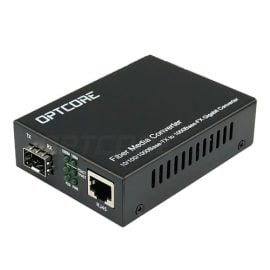
10/100/1000Base-T RJ45 to 1000Base-FX SFP Fiber PoE Media Converter
US$ 19.90 (Excl. VAT) -
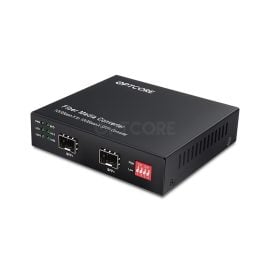
10G SFP+ to 10G SFP+ Fiber Media Converter (Repeater)
US$ 99.00 (Excl. VAT)
Conclusion
Perpetual PoE vs. fast PoE are not two opposing technologies but two complementary tools designed to meet different reliability requirements. The former focuses on “uninterrupted” power supply continuity, suitable for planned maintenance scenarios that require a zero-interruption guarantee; the latter is dedicated to “race against time” recovery speed, suitable for quick recovery after unexpected power outages. In increasingly high-availability network environments, these two technologies are often deployed simultaneously in the same deployment plan, each performing its own duties and jointly forming the last line of defense for power redundancy.
Read more
- What Is PoE Media Converter: A Complete Guide (2026)
- The Best PoE Ethernet Switch of 2026
- What Is PoE Injector: A Beginner’s Guide
