


 Optical Transceiver
 DAC/AOC Cable
 Fiber Cabling
 Networking
Blog, Networking Device
What Is PoE Media Converter: A Complete Guide (2026)
May
In the era of the Internet of Things, the deployment forms of network devices are becoming increasingly diversified. From security monitoring and smart buildings to industrial automation, more and more terminal devices need to be deployed in locations far from computer rooms and power outlets. It is in this context that a seemingly low-key but extremely critical technology has emerged: the PoE Media Converter. It cleverly combines photoelectric signal conversion with remote power supply, providing a simple and efficient solution for edge network deployment.
Table of contents
What is PoE?
To truly understand PoE media converters, it is necessary to first understand the core technology they rely on: PoE.
PoE, short for “Power over Ethernet.” It is a technology that enables the simultaneous transmission of data and power over standard Ethernet cables. In PoE systems, the power-supply equipment is called PSE (Power Sourcing Equipment), typically a PoE switch or injector. Power-receiving devices are called PD (Powered Devices), and typical examples include IP cameras, VoIP phones, and wireless access points.
The greatest value of this technology lies in its ability to transmit data and power over a single Ethernet cable. This simplifies wiring while significantly reducing installation costs and maintenance difficulties.
What is a PoE media converter?
After understanding PoE, let’s take a look at the PoE Media Converter.
An optical transceiver is a device that converts signals between different transmission media. The most common is to convert copper Ethernet signals into optical fiber signals. Its existence enables fiber-optic networks to interface with traditional copper-cable equipment, addressing the limited transmission distance of copper cables.
On this basis, a PoE media converter goes further: it can not only convert between fiber-optic and copper signals but also serves as power supply equipment (PSE), providing power to connected terminal devices via Ethernet cables. A typical PoE media converter includes a fiber-optic interface (such as an SC, LC, ST, or SFP slot) for uplink fiber links, as well as one or two RJ45 PoE interfaces for connecting remote devices.
The main use of the PoE Media Converter
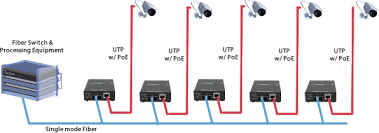
Figure 1: The use of PoE media converters (source from Google)
Security monitoring system
This is the most typical application scenario of the PoE Media Converter. When deploying IP cameras in locations such as parks, parking lots, and factory perimeters, they often face long distances and limited power access. The PoE Media Converter transmits monitoring signals to a control center several kilometers away over fiber-optic cables while supplying power to the cameras over Ethernet cables.
Wireless network coverage
When deploying wireless APs in large warehouses, sports venues, campuses, and other locations, PoE media converters can extend the network to cover blind spots via a fiber-optic backbone. Simultaneously, achieve a local power supply for APs without the need to search for power sockets for each AP.
Industrial automation and the Internet of Things
In industrial sites with high temperatures, high humidity, and strong electromagnetic interference, an industrial-grade PoE Media Converter can provide stable, reliable data and power connections for devices such as PLCs, industrial cameras, and sensors.
Intelligent transportation system
Monitoring and signaling equipment along highways, tunnels, and rail transit lines often spans tens of kilometers and operates in harsh environments. An industrial-grade PoE media converter is well-suited for such scenarios due to fiber optics’ long-distance transmission capabilities and its industrial-grade reliability.
Smart Buildings and Data Centers
In building automation and data center cabling, PoE media converters can connect end-to-end PoE devices, such as access control systems, information release screens, and environmental sensors, simplifying the overall cabling architecture.
Differences between PoE media converters and fiber optic transceivers
Many users may ask: I already have a fiber-optic transceiver; why do I still need a PoE media converter? The following table summarizes the core differences between the two:
| Non-PoE Media Converter | PoE Media Converter | |
| Core function | only realizes signal conversion between different media | including signal conversion and power supply |
| Power supply | Can not use as PSE | be used as PSE to power PD, with a maximum of 90W |
| Equipment architecture | Single photoelectric conversion module | photoelectric conversion module+ PSE power supply engine |
| Remote deployment | Need additional power lines | network cables to carry both data and power |
| Cost structure | a lower unit price | a higher unit price, but it eliminates the need for power line construction |
From the table, it can be clearly seen that fiber optic transceivers only undertake the task of converting optical and electrical signals, while PoE media converters simplify the originally complex three-level architecture of “power line + fiber optic transceiver + switch” into a single device by embedding the power supply function into the conversion process. This means that when deploying remote cameras or wireless APs, only one fiber optic cable needs to be pulled to the location of the converter, and then a short-distance network cable can be led out from the converter to complete the final delivery of data and power simultaneously, eliminating the need to lay power lines at the remote end.
How to choose a suitable PoE Media Converter
When facing numerous PoE Media Converter products on the market, it is recommended to focus on the following dimensions when selecting:
Power standard matching
This is the primary consideration when choosing. The required PoE standard is determined by the terminal equipment: 802.3af (15.4W) for basic IP phones and fixed cameras, 802.3at (30W) for multi-function high-definition cameras or multi-frequency wireless APs, and 802.3bt (60W~90W) for PTZ cameras, intelligent lighting, and edge computing terminals. Please also calculate the total power consumption of all connected devices to ensure the converter’s power supply capacity is not exceeded.
Fiber type and distance
Confirm the specifications of the existing fiber infrastructure: single-mode fiber is suitable for long distances (up to tens or even hundreds of kilometers), while multimode fiber is suitable for short distances (usually several hundred meters to several kilometers). At the same time, ensure that the fiber-optic connector type (LC, SC, ST, etc.) of the converter matches the actual fiber-optic wiring. If an SFP slot converter is used, it can flexibly adapt to different distances, speeds, and wavelengths by replacing the optical module.
Transmission rate
The current PoE Media Converter offers two speed options: 100 Mbps and 1 Gbps. For a regular 1080P camera, 100 Mbps is usually sufficient, but if deploying 4K high-definition monitoring or using a Wi-Fi 6/6E wireless AP or in multi-device aggregation scenarios, it is recommended to choose models with gigabit or higher bandwidth to avoid data transmission bottlenecks.
Environmental adaptability
This is an important distinction that distinguishes between commercial and industrial-grade products. If the equipment needs to be deployed outdoors, in factory workshops, substations, or similar environments, industrial-grade models are necessary. Industrial-grade PoE media converters typically feature a fanless design with a metal casing, support wide-temperature operation from -40°C to +75°C, offer dual redundant power inputs, and provide IP30 or higher protection levels, as well as surge and overload protection.
Management function
PoE media converters are divided into two types: unmanaged and managed. Non-management plug-and-play, suitable for simple point-to-point applications. The management type supports remote monitoring, VLAN partitioning, QoS policies, and other features, making it suitable for enterprise and industrial network environments that require centralized operations and maintenance.
Recommended products
-
3G-SDI Video SFP 1310nm 10km Dual Channel Optical Transmitters (Non-MSA)
US$ 52.00 (Excl. VAT) -
3G-SDI Video SFP 1310nm 10km Single Channel Optical Transmitter Module
US$ 24.00 (Excl. VAT) -
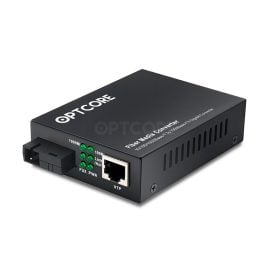
10/100/1000Base-T RJ45 to 1000Base-BX 20km Single Fiber WDM Media Converter (SC/ST/FC)
Price range: US$ 15.00 through US$ 16.00 (Excl. VAT) -
10/100/1000Base-T RJ45 to 1000Base-BX 80km Single Fiber WDM Media Converter (SC/ST/FC)
US$ 31.00 (Excl. VAT)
Conclusion
With the continued adoption of the Internet of Things and the rise of edge computing, PoE media converters are evolving as well. On the one hand, bandwidth is shifting from gigabit to 2.5G and 10G to support higher-resolution video streams and denser terminal access; on the other hand, intelligent management is a growing trend, with mainstream devices integrating digital diagnostic monitoring (DDM) functions to report real-time operating parameters.
For practitioners and integrators in the communication accessories industry, understanding and effectively using PoE media converters is mastering the most reliable edge-deployment tool in the era of intelligent networks. I hope this guide can help you make more rational decisions in practical applications.
Read more
- The Best PoE Ethernet Switch of 2026
- What Is a PoE Camera: A Beginner’s Guide
- What Is PoE Injector: A Beginner’s Guide
