






Blog, Network Cabling, Optical Networking
Passive Optical LAN: A Beginner’s Guide

Jun
Technology drives the broader adoption of passive optical LAN (also known as a passive optical local area network) across various sectors. Not having a long history as a passive optical network (PON), it is a better replacement for copper-based LANs in local area networks.
This article covers every aspect of passive optical LAN, including its definition, key components, merits and demerits, and the necessity of transitioning to such a network. Using fiber-optic technology, passive optical LANs allocate massive data from one source to various endpoints. Let’s explore more about this new type of local area network.
Table of contents
Passive Optical LAN Definition
A passive optical LAN, called POL or POLAN, is short for Passive Optical Local Area Network. This network is based on the Passive Optical Network (PON) architecture. It utilizes optical splitters to distribute data from one single source to multiple user endpoints. It also allows the transmission of bidirectional signals over one singlemode fiber using Wavelength Division Multiplexing (WDM) technology.
POL reduces network vulnerability points while boosting IT efficiency through simplification. It is also a cost-effective and energy-saving solution. This is because it breaks through distance constraints, using less power and fewer communications closets.
Further Reading
Reasons for Using Passive Optical LAN
Two reasons speed up the shift from copper-based LANs to fiber-centric POL. The first is due to the rat race between copper and optical cable companies. The second relies on the rapid development of various technologies, such as 5G, Wi-Fi 6, and the Internet of Things (IoT).
Switching from Copper to Fiber
Traditional copper cables may not meet the growing needs of technological advances. To build a more robust network connectivity, fiber-optic cables play a key role. As a reliable supplier of fiber optic solutions, OPTCORE offers a wide selection of optical cables used in fiber-optic networks. Here are some of them for your reference.
Recommend Products
-
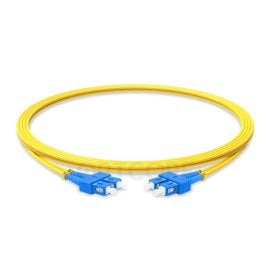
SC-SC 9/125 OS2 Singlemode LSZH Duplex Fiber Patch Cable
Price range: US$ 2.60 through US$ 27.50 (Excl. VAT) -
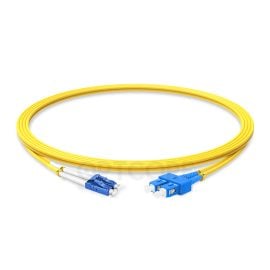
LC-SC 9/125 OS2 Singlemode LSZH Duplex Fiber Patch Cable
Price range: US$ 2.60 through US$ 27.50 (Excl. VAT) -
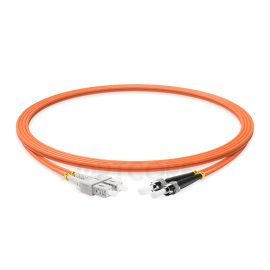
SC-ST 62.5/125 OM1 Multimode PVC (OFNR) Duplex Fiber Patch Cable
Price range: US$ 3.40 through US$ 13.00 (Excl. VAT) -
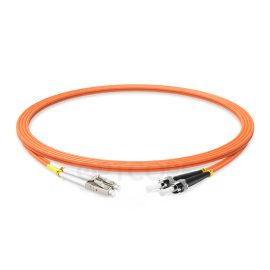
LC-ST 62.5/125 OM1 Multimode PVC (OFNR) Duplex Fiber Patch Cable
Price range: US$ 3.40 through US$ 13.00 (Excl. VAT)
Many cable companies talk about the limitations of copper. An example of this is Cat8 Ethernet cable, the newest version on the market. It supports 10G, 25G, and 40G Ethernet but with a limited transmission distance of 30 meters. So, fiber optic cables are superior for users who want to achieve data transfer rates of 200G, 400G, or higher.
Recommend Ethernet Cables
-
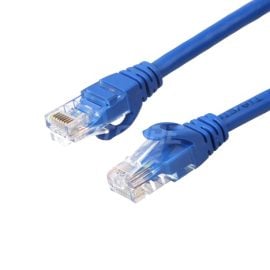
Cat6 Ethernet Network Patch Cable, Snagless Unshielded (UTP), PVC, Blue
Price range: US$ 0.85 through US$ 13.10 (Excl. VAT) -
Cat6 Snagless Shielded (SFTP) Ethernet Network Patch Cable, PVC, Blue
Price range: US$ 1.29 through US$ 17.70 (Excl. VAT) -
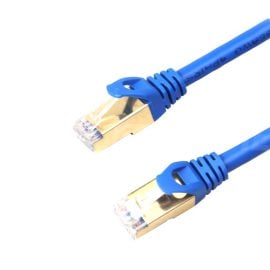
Cat7 Snagless Shielded (SFTP) Ethernet Network Patch Cable, PVC, Blue
Price range: US$ 2.20 through US$ 25.80 (Excl. VAT) -

Cat8 Snagless Shielded (SFTP) 25G/40GBase-T Ethernet Network Patch Cable, PVC, Black
Price range: US$ 2.25 through US$ 28.80 (Excl. VAT)
Technology Advances
Artificial intelligence, virtual reality, and Wi-Fi 6 are trendsetters that reshape the communications industry. To keep pace with the growth of 5G and Wi-Fi 6, the Internet of Things (IoT) is also experiencing significant expansion. These factors force more companies to connect multiple devices across wider areas with higher bandwidth.
Besides, cloud computing technology puts more pressure on the LAN. HD video streaming also asks more about network capacity. Traditional LANs cannot cater to the growing demand.
Key Components of Passive Optical LAN
It requires fewer network devices to deploy a Passive Optical LAN compared to traditional LANs. Generally, a POL system comprises four main components.
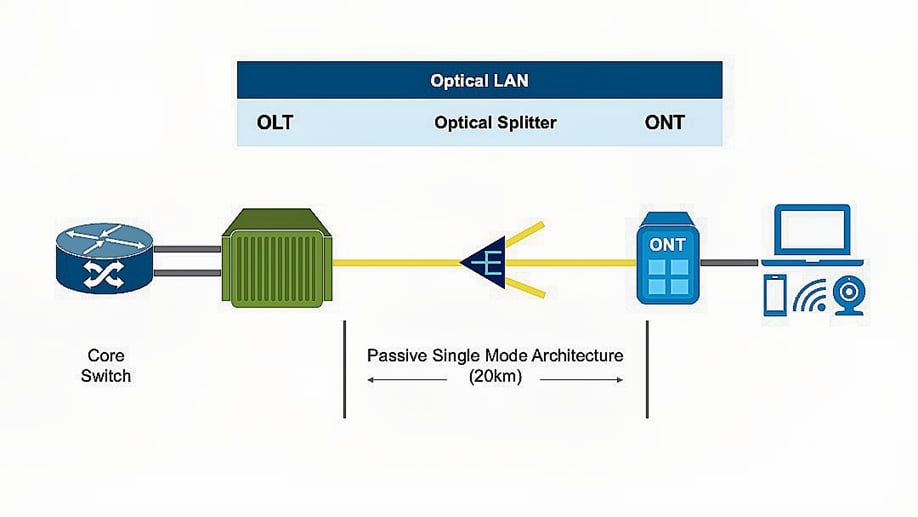
Optical Line Terminal (OLT)
The Optical Line Terminal (OLT), located in the building’s primary data center and the main distribution frame (MDF), manages upstream and downstream data signals. Its major function is to aggregate and distribute enterprise network connectivity. It also connects to the Wide Area Network (WAN) and companies’ internal resources via the core network router.
POL is a bridge that receives data from internet service providers (ISPs) and transmits it to optical network terminals (ONTs). At the same time, POL gathers lots of data from ONTs and sends it back to ISPs. One OLT can support from 200 Ethernet connections to over 7,000 Ethernet connections within one location. Besides, it enables redundant switching and power, with key features such as Ethernet bridging, user authentication, VLAN, and security filtering.
Passive Optical Splitter
The passive optical splitter (POS) sits between the OLT and ONT. It is a setup providing the point-to-multipoint connectivity. POS equally allocates optical signals from the OLT into multiple branches that link up to the ONTs. The word “passive” means the POS does not need a power supply.
Fiber optic splitters have various split ratios, fiber types, and package form factors. The commonly used splitters are PLC splitters. You may access our website to choose the suitable splitters to better distribute optical signals. These reliable splitters allow for split ratios ranging from 1:2 to 1:64, with a standard ratio of 1:32.
Optical Network Terminal (ONT)
The Optical Network Terminal (ONT) is an end-user interface within a passive optical LAN. As networks generally employ optical fibers, a conversion from optical signals to electrical signals occurs before linking your computers and various devices. ONTs and ONUs help with the optical to electrical conversion process. They transform singlemode fiber optical signals into RJ45 Ethernet interfaces.
Various places can be used to install such a small device, including the ONT, desk, wall, and zone box. ONTs are Power over Ethernet (PoE)- enabled, and some models serve as affordable replacements for traditional closet-based Ethernet switches.
Singlemode Fiber Cabling
SMF (singlemode fiber) is a kind of fiber optic cabling used in a building’s pathways. It is a physical object that connects the OLT, optical splitters, and ONTs. Running PON over multimode fiber (MMF) offers several options, and some closet-based ONTs can utilize the last 300 meters of copper cabling
Benefits of Passive Optical LAN
POL has several benefits, such as lowering installation and operating costs, providing higher security, and saving more energy and space.
Cost-Saving
The passive optical LAN applies to the backhauling of traffic from wireless access points. It works in two architectures: a stand-alone static Wi-Fi architecture without robust controller functionality and wireless access point (WAP) features. In the former case, POL lowers equipment expenses and reduces cabling infrastructure. In the latter scenario, the passive optical LAN enables WAP functionality, providing coverage for Wi-Fi services.
Higher Security
POL can eliminate network security gaps, thereby shrinking the network attack surface. Compared to copper cabling, fiber cabling offers stronger network security. Some companies usually have higher demands for networking devices. They often hold video conferences, need more secure wireless access, and consider efficient monitoring services. When deploying a passive optical LAN, these companies can converge all services into a single, secure infrastructure.
Energy-Efficient
The Passive Optical LAN is a network with future-proof features and high capacity. It has wide applications for campus connectivity and mobile backhauling. Besides, POL can cover a long distance of up to 20 kilometers, reducing the need for telecom closets, switches, and power every 100 meters. It is more energy-saving and becomes a green solution for enterprises.
Space Saving
Organizations are eager to save costs, and POL is a better option. Firstly, when floor space is reduced, corporate operating expenses will become lower. Secondly, Optical LAN offers greater gigabit Ethernet density in a smaller footprint. This encourages companies to adopt a green and sustainable path, utilizing POL’s practical cradle-to-grave lifecycle analysis.
Drawbacks of Passive Optical LAN
Less Likely to Deploy Promptly
Large enterprises can benefit a lot from installing a passive optical LAN. However, as investments in existing copper networks may be substantial, rapid adoption can pose a big challenge. Small-sized companies may find it less cost-effective to deploy POL as they have limited use of the passive optical LAN.
Possible to Face Single Point Failure
Thirty-two optical fibers converge into a single splitter module fed by a single fiber. There will be a single point of failure. To be worse, once the shared fiber is damaged, it can be a nightmare for all users. Because POL has a centralized setup, troubleshooting can also be rather tricky.
Conclusion
The passive optical LAN is a powerful point-to-multipoint network device. Its function is to use optical splitters to allocate data from a single source to many user endpoints. Large companies, campuses, and hospitals seeking to reduce costs and transition to a greener path should consider adopting the POL.
Reference
Read More
- The Definitive Guide to Fiber Optic PLC Splitter in 2022
- What is Passive Optical Network (PON)? Everything You Need To Know
- What is GPON? Everything you need to know
- What is ONT? Everything You Need to Know
