


 Optical Transceiver
 DAC/AOC Cable
 Fiber Cabling
 Networking
Blog
OM1 vs OM2 vs OM3 vs OM4 vs OM5: What’s the Real Difference and Which One Should You Choose?
Mar
When planning data center cabling, selecting optical modules, or upgrading a network, it’s very common to run into OM1, OM2, OM3, OM4, and OM5 fiber types. In real projects, many engineers don’t struggle with the theory itself, but with practical questions like OM3 vs OM4 or OM2 vs OM3. These categories are defined by TIA and ISO/IEC in multimode fiber standards. At the end of the day, they answer one simple question: How much bandwidth can this fiber handle, and how far can it go?
What Are OM1–OM5 Fibers
“OM” stands for Optical Multimode, which is a classification system for multimode fiber.
Multimode fiber has a larger core size, typically 50 μm or 62.5 μm. This allows multiple light paths to travel at the same time. Because of this design, it costs less and works well for short-distance transmission. That’s why it shows up everywhere in data centers and building networks.
OM1 and OM2
OM1 and OM2 represent the early stage of multimode fiber. These were built for lower-speed networks and are gradually fading out in modern deployments.
OM1 uses a 62.5μm core. This made light coupling easier in early networks, but it also introduced more modal dispersion. That wasn’t a big issue at 100M or 1G, but once networks moved to 10G, the limitation became obvious. OM2 was moved to a 50 μm core, which improved signal quality and bandwidth to some extent. Still, it was mainly designed for LED light sources. In real deployments today, OM2 can handle short 10G links, but the margin is tight, and stability is not ideal.
-

LC-LC 50/125 OM2 Multimode PVC (OFNR) Duplex Fiber Patch Cable
Price range: US$ 2.90 through US$ 11.60 (Excl. VAT) -
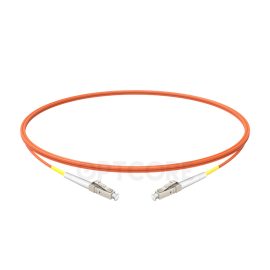
LC-LC 50/125μm OM2 Multimode Simplex PVC Fiber Optic Patch Cable
-
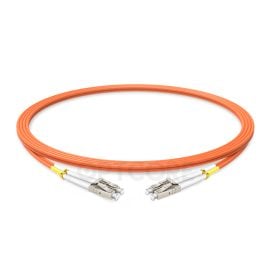
LC-LC 62.5/125 OM1 Multimode PVC (OFNR) Duplex Fiber Patch Cable
Price range: US$ 3.10 through US$ 12.70 (Excl. VAT)
OM3 and OM4
Starting from OM3, things changed quite a bit. These fibers are optimized for VCSEL (laser-based transmission), which makes them much more suitable for high-speed networks.
The OM3 standard offers 2000 MHz·km bandwidth. This standard can support 10G and even 40G or 100G for short distances. This was the reason many older data centers used OM3 as a cost-effective option. OM4 takes it a step further with a 4700 MHz·km bandwidth. The first thing you’ll probably notice with OM4 is the distance. For the same speed, you can go much farther with OM4.
-
LC-LC 10G OM3 Multimode Duplex LSZH Fiber Optic Patch Cable
Price range: US$ 2.80 through US$ 40.70 (Excl. VAT) -
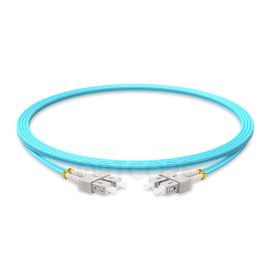
SC-SC 10G OM3 Multimode Duplex PVC Fiber Optic Patch Cable
-
LC-LC 40/100GB OM4 Multimode LSZH Duplex Fiber Patch Cable
Price range: US$ 3.00 through US$ 73.00 (Excl. VAT) -
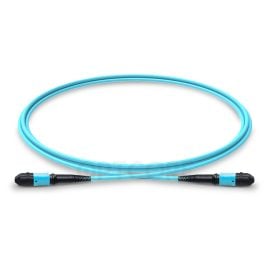
Multimode OM3 MPO to MPO Trunk Cable, 12 Fiber, Female, Type B, LSZH
Price range: US$ 19.00 through US$ 173.00 (Excl. VAT)
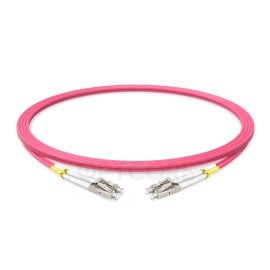
OM5
OM5 is built on top of OM4, but introduces support for SWDM (Short Wavelength Division Multiplexing). It allows multiple wavelengths (850–950nm) to run over the same fiber. That means more data without adding more fiber strands. In practice, OM5 is still not widely used. It requires specific SWDM or BiDi modules, and the overall cost is higher. Most deployments still stay with OM4 unless there is a clear need for wavelength multiplexing.
OM2 vs OM3
At first glance, OM2 and OM3 look similar. Both use a 50 μm core, and visually they are almost identical. But in real deployments, this is actually a major upgrade point.
OM2 is part of the LED transmission era, while OM3 was designed for use with VCSEL lasers. This has a significant effect on performance at higher speeds. OM2 is already at the limit at 10G, while OM3 was designed for 10G and beyond. When we look at bandwidth, we can see the difference between the two. OM2 has a bandwidth of 500 MHz·km, while OM3 has a bandwidth of 2000 MHz·km. This difference can be seen in the distance that each cable can transmit at 10G. While OM2 can transmit up to 82 meters, OM3 can transmit up to 300 meters.
From a deployment perspective, this leads to a very practical conclusion. OM2 fits legacy or low-speed networks, while OM3 is where modern data center cabling really starts.
| OM2 | OM3 | |
|---|---|---|
| Core Size | 50/125 μm | 50/125 μm |
| Light Source | LED / partial VCSEL | VCSEL (laser-optimized) |
| Bandwidth (850nm) | 500 MHz·km | 2000 MHz·km |
| Max Distance (10G) | 82 m | 300 m |
| Support for 40G/100G | Not supported | Supported (short distance) |
| Typical Applications | 1G networks, legacy cabling | Data centers, 10G networks |
| Network Positioning | Transitional solution | Mainstream starting point |
OM3 vs OM4
The jump from OM3 to OM4 is not a full generation change, but more like a strengthened version within the same generation. Both use 50 μm cores and are optimized for VCSELs. In terms of compatibility, there is almost no difference. Most modules that work with OM3 will work with OM4 directly.
The real difference lies in bandwidth and signal quality. OM3 is at around 2000 MHz·km, whereas OM4 is at around 4700 MHz·km. This increases the distance and reduces signal loss. In reality, OM3 is around 300 meters at 10G, whereas OM4 is around 550 meters at 10G. If we go higher at 40G or 100G, OM3 vs OM4, OM3 is around 100 meters, whereas OM4 is around 150 meters.
But more importantly, OM4 provides more design flexibility. In reality, cabling routes are not always straight and perfect in data centers. Patch panels, connectors, and routes all contribute to some amount of loss. OM4 provides more headroom, which makes life easier.
| OM3 | OM4 | |
|---|---|---|
| Core Size | 50/125 μm | 50/125 μm |
| Light Source | VCSEL | VCSEL |
| Effective Modal Bandwidth (850nm) | 2000 MHz·km | 4700 MHz·km |
| Max Distance (10G) | 300 m | 550 m |
| Max Distance (40G/100G) | 100 m | 150 m |
| Bit Error Rate Performance | Stable | More stable |
| Data Center Fit | Standard deployments | High-density / high-performance deployments |
| Cost | Lower | Slightly higher |
| Long-Term Scalability | Moderate | Better |
Application Scenarios and how to choose
When selecting multimode fiber, two factors are essential: transmission distance and the type of optical module. In practical network deployment, you’re not just choosing a “fiber model”; you’re selecting an entire system. Establishing a fiber-optic link essentially involves the coordinated use of fiber and optical modules. If you’re facing a specific scenario and need to choose the right solution for your needs, you’ll find the precise answer in this section.
Legacy campus or building networks
In older networks, OM1 and OM2 are still common. These links usually run at 1G speeds. A typical setup is 1000BASE-SX SFP modules with LC duplex fiber. Distances are usually within a few hundred meters. In this case, keeping the existing fiber is often fine. There is no strong need to upgrade unless bandwidth requirements change.
Data center rack-to-rack connections
Inside a data center, things change quickly once you move to 10G. A common scenario is ToR (Top-of-Rack) switches connecting to aggregation switches. Distances are usually between tens and a couple of hundred meters. Here, OM3 and OM4 are the main choices. For 10G deployments, SFP+ SR modules with LC duplex fiber are widely used. OM3 is often enough if distances are short and budgets are tight.
-

Generic SFP-10G-SR Compatible 10GBASE-SR SFP+ 850nm 300m Transceiver
US$ 7.80 (Excl. VAT) -
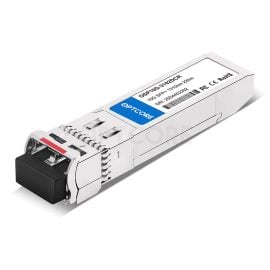
Generic SFP-10G-LRM Compatible 10GBASE-LRM SFP+ 1310nm 220m Transceiver
US$ 13.00 (Excl. VAT) -

Generic Compatible 25G SFP28 SR 850nm 100m Transceiver
US$ 15.00 (Excl. VAT) -

Generic SFP-1G-SX Compatible 1000BASE-SX SFP 850nm 550m Transceiver
US$ 5.00 (Excl. VAT)
High-density AI or HPC clusters
However, when talking about 40G or 100G upgrades, OM3 vs OM4, OM4 starts to make a lot of sense. For example, QSFP+ SR4 (40G) or QSFP28 SR4 (100G) use MPO connectors and transmit data in parallel. OM3 can reach the limit very quickly. However, OM4 provides extra headroom. In the real world, headroom is very important. In the real world, cables are not straight. Every connector and every patch panel adds loss.
Typical setups include:
40G: QSFP+ SR4 + MPO fiber
100G: QSFP28 SR4 + MPO fiber
-

Generic Compatible 100G QSFP28 SR4 850nm 100m Transceiver
US$ 29.90 (Excl. VAT) -
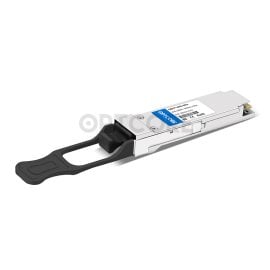
Generic Compatible 40GBASE-SR4 QSFP+ 850nm 100m Transceiver
US$ 23.00 (Excl. VAT) -

Generic Compatible 40GBASE-eSR4 QSFP+ 850nm 300m Transceiver
US$ 27.00 (Excl. VAT) -
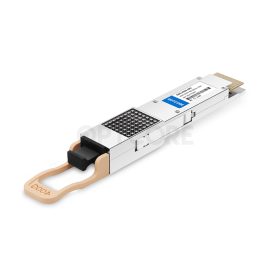
Generic QSFPDD-400G-SR8 Compatible 400GBASE-SR8 QSFP-DD 850nm 100m Transceiver
US$ 139.00 (Excl. VAT)
Special multi-wavelength scenarios
OM5 comes into play when there is a clear need to reduce fiber count using SWDM or BiDi modules. It allows multiple signals on a single fiber, which can be useful in high-density environments. That said, many engineers stay cautious. Without a clear requirement, OM4 already covers most 100G scenarios and even some 400G short links.
-
Generic Compatible 100G QSFP28 SR4 850nm 100m Transceiver
US$ 29.90 (Excl. VAT) -
Generic QSFPDD-400G-SR8 Compatible 400GBASE-SR8 QSFP-DD 850nm 100m Transceiver
US$ 139.00 (Excl. VAT) -
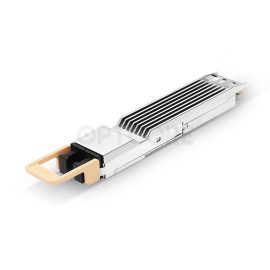
Generic OSFP-800G-SR8 Compatible 800G 2xSR4/SR8 OSFP Finned Top 850nm 100m Dual MPO-12/APC Transceiver
US$ 599.00 (Excl. VAT)
How to Choose
If we look at real-world deployments, they follow a very simple logic:
* For maintaining existing networks → OM2
* For new 10G deployments → OM3 is sufficient
* For 40G/100G and future-proofing → OM4 is more prudent
* For SWDM and minimizing fiber count → OM5
FAQ
#1 Can different OM fibers be mixed in one link?
For backward compatibility, generally speaking, yes, but performance will drop to the lowest-grade fiber in the link. In high-speed networks, this often leads to instability.
#2 Do I have to upgrade directly to OM5?
In most cases, no. Unless you plan to use SWDM or need to reduce fiber count, OM4 is already enough for most deployments.
Conclusion
For OM1 and beyond, it is really more of a bandwidth and quality issue. Today, in networks, we primarily have OM3 vs OM4. OM4 is a little more flexible. OM5 is going in a different direction with respect to multiplexed wavelengthsHowever, it is important to note that OM5 use is application-dependent. It is often the case that, when you look at the three of them together, they form a stable network.
Read more
- How to Protect Fiber Optic Cables – A Beginner’s Guide
- How to Convert Multimode to Single-mode Fiber: A Complete Guide
- OS1 vs OS2 Fiber, What is the Difference?
