


 Optical Transceiver
 DAC/AOC Cable
 Fiber Cabling
 Networking
Blog, Networking Device
The 9 Best Enterprise Network Switches for 2026
Apr
The network infrastructure is undergoing unprecedented changes. The explosion of AI/ML workloads, the popularity of Wi-Fi 7, and the deepening of edge computing all put forward more stringent requirements on the core of enterprise network switches. In 2026, choosing a suitable switch is not only about connecting devices but also the cornerstone of building intelligent, secure, and efficient businesses.
To provide authoritative guidance in this rapidly evolving landscape, we have rigorously compiled annual reports, market performance data, and technological foresight from leading brands. This guide presents the top 10 enterprise-level switches to watch in 2026, with expert recommendations tailored to three key scenarios: data centers, park cores, and small- and medium-sized networks.
Table of contents
What is an Enterprise Network Switch?
An enterprise-level switch is an Ethernet switch that provides data forwarding for Fast Ethernet, Gigabit Ethernet, and 10 Gigabit Ethernet. It has management functions such as CLI, Web, and SNMP, as well as operational configuration functions such as display, modification, backup, and restore. Generally speaking, enterprise-level switches are rack-mounted. When used as a backbone switch, it can support over 500 information points. According to the three-layer network architecture model, enterprise-level switches can be divided into three types: access layer switches, aggregation layer switches, and core layer switches.
Enterprise-level switches typically adopt a modular design, meaning their components are independent, allowing enterprises to flexibly adjust switch functionality and performance as their network requirements change. This design gives the switch high flexibility and scalability. Suitable for building a high-speed and reliable network backbone to support large-scale data transmission and control.
How to Choose an Enterprise Network Switch
The selection of switches is actually a predictive investment for the next 3-5 years of business planning. Overall, the selection of enterprise-level switches should focus on performance and scalability. The core functions of enterprise-level switches are efficient data transmission and network management, so it is necessary to consider the number of ports, supported transmission rates, and the switch’s bandwidth. When choosing, ensure the selected switch meets the enterprise’s current network traffic needs and has the potential for future expansion. Considering the needs of enterprise network security, switches that support advanced features such as VLANs, ACLs (Access Control Lists), firewalls, etc., should also be selected.
For large enterprises pursuing AI transformation or operating dense data centers, Cisco, Arista, Huawei, and Juniper Networks offer top-tier offerings that deliver robust, forward-looking infrastructure. Large or medium-sized parks prioritizing stability and cost-effectiveness can rely on HPE Aruba for outstanding performance and reduced operational costs. Small or medium enterprises, or those with budget constraints, will benefit from QNAP, TP-Link, and Ubiquiti, which offer high-end networking capabilities with flexible, scalable options to maximize budget efficiency.
Top 9 Enterprise Network Switches
For Data Center and AI-ready Infrastructure
1. Cisco Nexus 9300 series
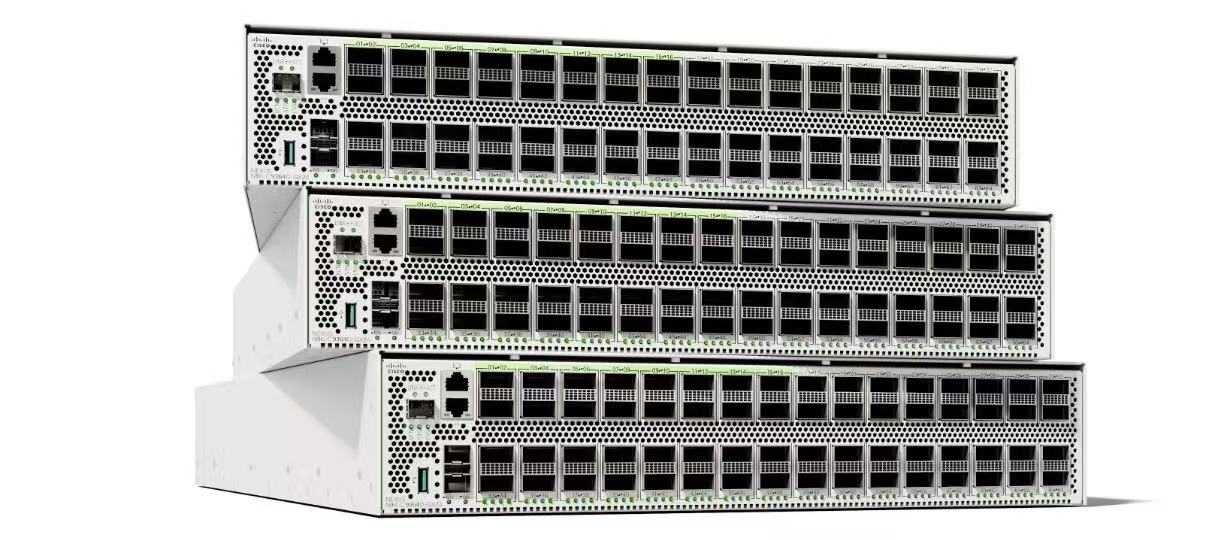
Specification:
- Fixed ports: 64×400G QSFP-DD+2 1/10G SFP+
- Performance bandwidth: 51.2 Tbps; Forwarding rate: 8.35 bpps
- Management supports: Cisco NX-OS or ACI modes.
- Core features: MACsec encryption, VXLAN EVPN, Line speed forwarding
The reason you choose it: As a perennial leader in the switch industry, the Nexus 9300 series will remain the preferred choice for ultra-large-scale data centers in 2026. It is equipped with a brand-new Silicon One G300 chip, which provides up to 102.4Tbps of switching capacity and natively supports 400G/800G/1.6T port density. Its core advantage lies in the powerful, unified management platform, Nexus One, and the embedded AI telemetry function, which can actively detect network congestion and security threats, thereby maximizing the AI cluster’s computing efficiency.
2. Arista R4 series
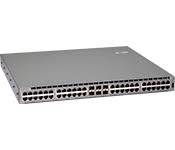
Specification:
- Modular line cards support multiple interface densities and can be configured with 36 800G ports.
- The total throughput of the performance system is 460 Tbps (full duplex 920 Tbps), supporting 576 800G or 1152 400G ports.
- Core feature supports 25G-800G line-speed encryption (TunnelSec) based on the Broadcom Jericho 3-AI chip.
The reason you choose it: My evaluation of Arista is ‘highest execution,’ and its R4 series is synonymous with pure performance. It is the first in the industry to publicly offer a port speed of 3.2Tbps, coupled with the proven EOS (Scalable Operating System) and CloudVision management platform, providing unparalleled programmability and stability for large cloud service providers and AI research institutions that pursue ultimate performance and are passionate about automation.
3. Huawei CloudEngine 16800-X

Specification:
- The modular line card machine supports up to 288 800GE ports.
- Performance supports multiple port rates (10GE/25GE/40GE/100GE/200GE/400GE/800GE)
- Key features: exclusive AI ECN algorithm, large routing table capacity, VXLAN virtualization
The reason you choose it: Huawei’s CloudEngine 16800-X receives recognition for its visionary and comprehensive engineering. It is distinguished by its AI ECN algorithm that intelligently manages and prioritizes AI training traffic, thereby minimizing latency and protecting against network congestion-induced losses. Its large routing table capacity further reinforces its suitability as a core switch for large enterprise parks and operator networks.
For Large and Medium-sized Enterprise Park Network
4. Cisco Catalyst 9300/9400 series
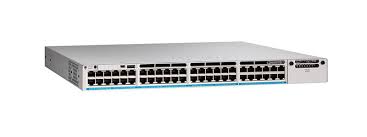
Specification:
- Port configuration includes 36 2.5G UPOEs and 12 mGig (100M/1G/2.5G/5G/10G) UPOEs+-
- Modular uplink option-
- StackWise-1 T with a maximum stacking bandwidth of 1 Tbps-
- Switching capacity 580 Gbps-
- Power supply supports PoE+, UPOE (60W), UPOE+(90W)-
- Three-layer management, supporting SD Access and DNA Center
The reason you choose it: This can be considered the “gold standard” for enterprise access switches. The Catalyst 9000 series achieves automated policy orchestration from users to devices through the DNA Center and SD Access architecture. It provides the industry’s most comprehensive high-density, high-power PoE++ (up to 90W) ports, enabling easy power for the latest Wi-Fi 7 APs and high-power IoT devices. Choosing it means choosing a set of security and strategic solutions that have been thoroughly tested.
5. HPE Aruba CX 6300 Series
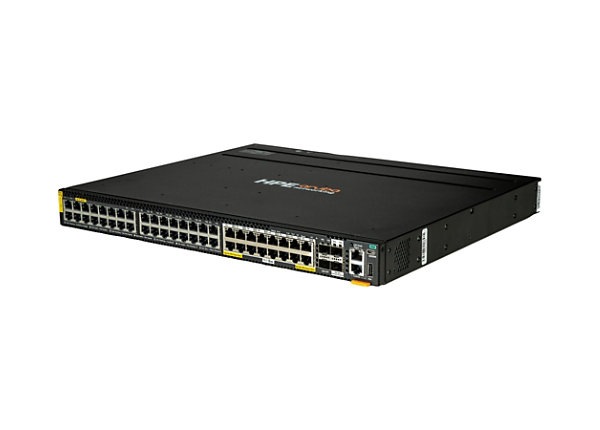
Specification:
- Port configuration includes 48 Smart Rate ports (100M/1G/2.5G/5G)
- Uplink supports up to 50G uplink (via SFP56 port)
- Switching capacity 880 Gbps
- The total budget for PoE power supply is 2880W, supporting IEEE 802.3bt (Class 6 PoE, 60W)
- Key features can be stacked up to 10 members, with three layers of management, supporting BGP, EVPN, and VXLAN.
The reason you choose it: As Cisco’s primary competitor, the Aruba CX 6300 series excels at reducing the total cost of ownership and streamlining management. The AOS-CX operating system and cloud-native management via Aruba Central consistently receive superior service and support ratings. Enterprises seeking high performance and reliability without extensive IT resources will find this solution the optimal choice.
6. Juniper Networks EX Series
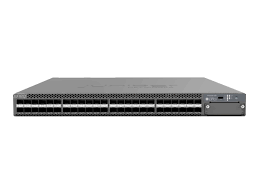
Specification:
- Port configuration includes 12 100M/1/2.5/5/10GbE ports and 36 100M/1/2.5 GbE ports; Choose 4 10/25GbE uplink options
- Stacking 400 Gbps Virtual Chassis Stacking Bandwidth
- Switching capacity 1020 Gbps (bidirectional)
- PoE powered PoE+(802.3bt), with up to 90W per port and a total budget of 1800W
- Key feature: three-layer management, supporting BGP, EVPN, VXLAN, integrated with Mist AI
The reason you choose it: Juniper Networks’ EX series defines full-stack AI in network switching. Distinguished in Gartner’s supply chain forecasting and integrated with the Mist AI platform, it transforms networks from passive response to proactive prediction—enabling resolution of most issues before they impact operations. This series is recommended for enterprises seeking to elevate efficiency and harness intelligent troubleshooting through AI.
For Small and Medium-sized Enterprises and Working Groups
7. QNAP QSW-M7230-2X4F24T
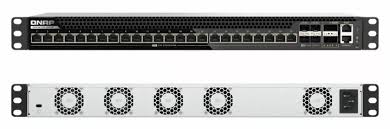
Specification:
- Port configuration: 2 100GbE QSFP28+4 25GbE SFP28+24 10GbE RJ45
- Switching capacity 1080 Gbps
- Unblocking throughput of 540 Gbps
- Manage webpage management, L3 Lite network management type
- Key features: MC-LAG, lossless Ethernet (PFC/ECN), supporting RDMA and RoCE
The reason you choose it: This 1U switch is unrivaled in the small and medium-sized enterprise market, offering 2 100GbE, 4 25GbE, and 24 10GbE ports in a compact chassis. It fully supports MC-LAG for high availability and lossless Ethernet. For small AI clusters, high-speed storage networks, or backbone upgrades, it delivers enterprise-grade 100GbE capability at an accessible price for small and medium businesses.
8. TP-Link Omada Pro Series
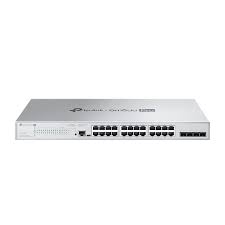
Specification:
- The port configuration includes 24 2.5G PoPoE++ RJ45 + 44 25G SFP28 uplink ports.
- Exchange capacity 296 Gbps
- The total budget for PoE power supply is 1440W, with a maximum of 90W per port (802.3bt)
- Three-layer management, supporting Omada SDN cloud platform CLI、Web GUI
- Key features can be physically stacked up to 12 members, supporting advanced routing protocols such as BGP and OSPF.
The reason you choose it: The Omada Pro series delivers a revolutionary experience in multi-branch network management with its extremely simple cloud management platform. It supports zero-touch deployment, multi-tenant management, and powerful penetration testing, allowing hosting service providers to deliver high-quality network services to multiple customers at extremely low labor costs. For chain stores and small and medium-sized enterprises, it is an excellent choice for managing the internet with just one mobile phone.
9. UniFi Pro Max Series
Specification:
- Port configuration includes 8 2.5G PoE++16 1G PoE+RJ45+2 10G SFP+uplink
- The total budget for the PoE power supply is 400W
- Three-layer management, centralized management through UniFi controller
- Key feature: Etherlighting™ Lamp effect, free subscription license fee
The reason you choose it: The core appeal of Ubiquiti lies in its powerful, unified UniFi controller ecosystem, which is free of subscription licensing fees. From routers and switches to Wi-Fi APs, all devices are managed uniformly through a single intuitive graphical interface. The Pro Max series offers powerful performance, including 25G ports and multi-gigabit PoE++, and is highly favored by creative studios, design companies, and SOHO elites with strict requirements for aesthetics and usability.
FAQs
Q: What are the most critical factors to consider when choosing an enterprise switch in 2026?
A: Unlike a few years ago, when port speed was the sole consideration, selecting a switch in 2026 requires a comprehensive evaluation of the following points: Application scenarios, port speed and media, PoE power budget, AI readiness features, management and automation, scalability.
Q: Why have mGig and 90W PoE+become the “standard” for access switches in 2026?
A: The wireless aggregation rate of Wi Fi 7 APs generally exceeds 10Gbps. Its wired port requires at least 2.5 Gbps, ideally 5 Gbps, to avoid bottlenecks. However, high-performance Wi-Fi 7 APs, pan-tilt-zoom cameras, smart displays, and other devices often consume more power than traditional PoE+ (30W) standards. 90W PoE++ (802.3bt) provides both power and data transmission over a single cable, eliminating the need for separate power sockets and reducing setup costs.
Q: For multi-branch enterprises, which is the most convenient and worry-free multi-cloud management platform?
A: If you pursue ultimate simplicity and multi-tenancy capabilities, the TP Link Omada Pro series has powerful zero-touch deployment and penetration operations, allowing you to establish independent management views and configuration strategies for multiple customers with just one phone.
If you need a unified interface with a design sensibility and dislike license fees, the Ubiquiti UniFi Pro Max series is undoubtedly an excellent choice. If you are a medium- to large-sized enterprise and need AI-driven, advanced operations, integrating Juniper EX series and Mist AI can enable proactive fault prediction. The HPE Aruba Networking CX 6300 series, when paired with Aruba Central, stands out for its comprehensive functionality and excellent service support reputation.
Q: The term “lossless Ethernet” is often mentioned in switch specifications, “PFC” 、 “ECN”. What’s the use of it?
A: PFC (Priority Flow Control) is equivalent to opening up a dedicated channel for AI data flow. When this channel is blocked, only the flow on this channel needs to be paused separately. This does not affect other lanes, ensuring no packet loss.
ECN (Explicit Congestion Notification) is more intelligent, as it notifies the sender via tagging before congestion occurs, allowing it to slow down and avoid congestion at the source actively.
These two technologies combine to achieve lossless Ethernet, which is the foundation for carrying RDMA/RoCE storage protocols and AI distributed training traffic.
Q: I have seen many models that support stacking and VXLAN. What method should be used to expand the network?
A: The problems and application scales solved by the two are different:
Switch stacking (or virtual chassis) virtualizes multiple physical switches into a logical device for management through dedicated stacking cables. It simplifies management, enhances port density, and local high availability, making it suitable for simplifying access layers in the same data center or on the same floor.
VXLAN/EVPN is the core technology of modern large-scale networks. It extends the second-layer network across the third-layer IP network via tunnels, allowing you to cross different buildings, cities, and even data centers and build a logically interconnected, large-scale second-layer domain. This is the cornerstone of building large-scale, multi-active data centers and flexible campus networks.
Many mid- to high-end switches now support both technologies simultaneously. You can simplify local operations and maintenance with stacking at the access layer, and build resilient overlay networks with VXLAN at the core/aggregation layer.
Conclusion
Whether you are building a high-speed AI training network or a minimalist cloud management platform for multiple branch offices, the key is to be “moderately ahead of the curve” – both meeting current needs and leaving flexibility for traffic growth and feature iteration in the next three years. The switches of 2026 have already surpassed the original definition of “connectivity” and become the cornerstone of business intelligence and agility.
We have compiled a list of the top 10 series spanning data centers, campuses, and small- and medium-sized networks, and selected the most recognized models in the market. The core purpose is to help you find the one that matches your development pace among the dazzling array of technical parameters. I hope this 2026 switch selection guide can help you make informed decisions.
Read more
- The Best PoE Ethernet Switch of 2026
- What is Virtual LAN (VLAN)? A Complete Guide
- MPO-8, MPO-12, or MPO-24? Choosing the Right Backbone for Your 400G Infrastructure
