


 Optical Transceiver
 DAC/AOC Cable
 Fiber Cabling
 Networking
Blog, Optical Networking
HFC vs. FTTH: Which one is better?
May
HFC vs. FTTH is essentially a battle over the last-kilometer technical line. HFC technology has enabled the use of optical fibers in housing and buildings and has already replaced thousands of coaxial cables for final access, balancing cost and performance. The FTTH has installed optical fiber in the user’s home and chosen to eliminate the copper-age bottleneck by using a pure optical network. The two-sided games are directly related to career investment decisions and network planning, as well as Internet connection speeds for each home and company, delay expressions, and even future upgrade spaces.
With the spread of 4K/8K ultra-high-definition video, cloud gaming, video conferencing, and AI applications, there is a growing demand for user bandwidth and network stability. HFC will not be obsolete today as the wave of all-optical networks sweeps the world, and it is waiting for the large-scale commercialization of 10G PON and the accumulation of 50G PON. How far can you go with the latest DOCSIS 4.0 standard? This article will systematically disintegrate the HFC and FTTH from multiple dimensions, such as technology principles, performance differences, deployment costs, and future evolution, helping workers in the network parts industry, network planners, and regular broadband users build a clear cognitive framework and understand the true logic behind the evolution of this broadband technology.
Table of contents
What is HFC
HFC (hybrid fiber-coaxial) is an access network architecture that combines optical fiber transmission with coaxial cable distribution. Its operating principle is not complicated: the optical fiber transmits a signal from the central machine room to the optical node near the cell or block, where the optical signal is converted to an electrical signal and then delivered to the user’s home via the existing coaxial cable television line.

Figure 1: HFC access network (source from web)
The core standard the HFC network complies with at the data-transfer level is DOCSIS (Data Over Cable Service Interface Specification). This protocol normalizes communication between cable modems and head devices. The current mainstream standard is DOCSIS 3.1, and the new-generation DOCSIS 4.0 is also beginning to enter the commercial stage. The HFC network can be pushed down to 10 Gbps or lower. Recent results show that under 1.8 GHz spectral conditions, the downlink speed of DOCSIS 4.0 has already reached 16 Gbit/s, and the uplink speed is up to 6-7 Gbit/s.
However, HFC is not perfect. The most significant limitation is that all users under the same optical node, which are the characteristics of the shared medium, share the bandwidth of the coaxial cable of the same segment, and as the number of Internet users increases in the peak time zone, the speed at which each user is actually assigned can be significantly reduced.
What is FTTH
FTTH (fiber to the home) is a full-fiber-optic access scheme that installs optical fiber to a user’s home. From the core machine room to the user terminal, no copper wire is used in the entire transmission link, and the signal travels long distances as light.
The PON system comprises an optical line terminal in a machine room, an optical network unit on the user side, and an intermediate optical distribution network. The main feature is that it does not include active electronic equipment requiring external power in the transmission path and completes signal distribution solely through the passive spectroscope. This design not only reduces failure rate and operating costs but also provides outstanding FTTH performance.
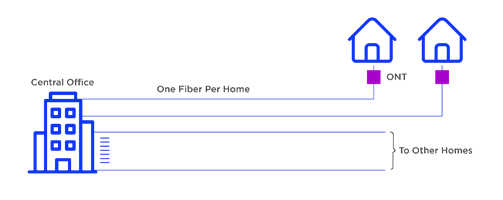
Figure 1: FTTH access network (source from web)
According to the technical standards, IEEE and ITU-T announced the EPON and GPON standards in 2004, enabling FTTH-scale applications. The Gigabit broadband network based on the 10G PON technology achieves large-scale commercialization, the FTTH coverage rate exceeds 90%, and the direction of technological evolution is going toward 50G PON. The advantages of FTTH are remarkable: bandwidth is highly symmetrical, signal attenuation is very low, electromagnetic interference is not encountered, and the service life is long.
HFC vs FTTH: the differences between them
Transmission media and network architecture
HFC is a blend of “fiber optic and coaxial cables”; the main line is optical fiber, and the interstage depends on coaxial cables. FTTH is a pure fiber-optic end-to-end scheme. This difference directly determines the disparity between bandwidth symmetry and upgrade capability. Although the bandwidth of coaxial cable is naturally limited, optical fiber can easily support vertical and horizontal transmission.
Speed performance
FTTH can enable a vertical transition from Gigabit to 10 Gigabit due to optical fiber’s low loss and high bandwidth. DOCSIS 4.0 has already narrowed the speed gap between HFC and FTTH and can theoretically reach 10-16 Gbps.
Delay and reliability
The delay in fiber-optic transmission is much lower than that of coaxial cable. HFC is a shared medium at the service group level, and multi-user competition for uplink channels introduces additional queuing delay. FTTH has demonstrated lower, more stable latency in multiple studies and practical tests, with significant advantages for real-time interactive applications and industrial-grade scenarios.
Deployment costs
This is the most competitive dimension of HFC. HFC can fully utilize the existing coaxial cable infrastructure, and the initial deployment cost is much lower than that of FTTH, which requires reinstalling fiber-optic cables in households. The cost per user for FTTH under a PON architecture is approximately $200-$400. New residential areas or large commercial buildings usually adopt FTTH solutions directly, whereas fiber-optic renovation in older residential areas faces many practical difficulties, such as wall perforation and property coordination.
Scalability and future evolution
FTTH’s extensibility is almost a “one-step” process. The carrier can upgrade the speed from 1 G to 10 G to 50 G only by replacing the devices at both ends without changing the fiber line itself. HFC upgrades often involve process modifications, such as downshifting optical nodes and replacing active devices.
Which one is better
From the perspective of technology advancement and future evolution, FTTH is definitely better. All optical fiber architectures precede HFC in most dimensions, including bandwidth, delay, symmetry, reliability, and energy consumption. With the growing adoption of applications such as ultra-high-definition video, cloud gaming, AR/VR, and AI reasoning, demand for home and corporate upload speeds with low latency will increase, and the potential of FTTH will be more fully realized.
But from the perspective of realistic deployment and cost, HFC remains invaluable. For cities and areas that already have a coaxial cable network, HFC can use the DOCSIS 4.0 upgrade to deliver an experience close to FTTH at very low marginal cost, while avoiding the costs of large-scale remodeling. Some carriers take a flexible strategy. At the same time, the world’s leading carriers are accelerating FTTH coverage.
Looking ahead, it is clear that FTTH will become the mainstream broadband access system rather than HFC. However, this does not mean that HFC disappears rapidly. Its migration value offers a low-cost broadband upgrade and creates an opportunity to reshape the FTTH career. In a predictable time, both will evolve in parallel and continue to develop.
For developers and buyers in the telecommunications parts industry, the continued evolution of HFC and FTTH means significant capacity upgrades and increased demand. From the optical transmitter/receiver module to the spectroscope, to the optical node, and to the active device on the HFC line, the parallel development of the two technology lines will result in sustainable industry growth. Understanding both differences and development trends will not only help users provide accurate product recommendations but also help companies ride the wave of technological change.
Recommended products
-
GPON OLT SFP Class C+ 1490nm-TX/1310nm-RX 20km Transceiver
US$ 49.00 (Excl. VAT) -
GPON OLT SFP Class C++ 1490nm-TX/1310nm-RX 20km Transceiver
US$ 59.00 (Excl. VAT) -
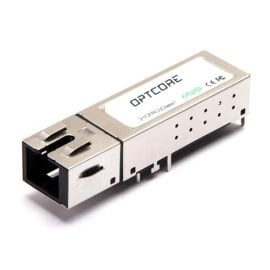
GPON ONT ONU SFF Class B+ 1310nm-TX/1490nm-RX 20km Transceiver
US$ 35.00 (Excl. VAT) -
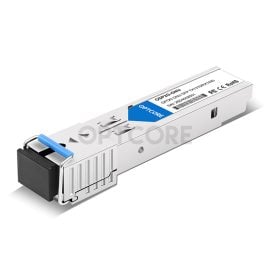
GPON ONT ONU SFP Class B+ 1310nm-TX/1490nm-RX 20km Transceiver
US$ 35.00 (Excl. VAT)
Conclusion
HFC vs. FTTH are not simple alternatives; they are optimal solutions at different stages of broadband access and in different scenarios. FTTH is a future optical fiber architecture that delivers long-term advantages over copper equivalents, ultra-low latency, and passive motion maintenance.
For operators and purchasers in the telecommunications components industry, ongoing enhancements to FTTH depth coverage and HFC are intended to support the long-term presence of devices such as optical transceiver modules, spectrometers, optical nodes, and amplifiers. A precise grasp of the evolutionary rhythm of the two technologies can not only provide a more accurate product approach for the client but also lead the way under the dual drive of all-optical waveforms and memory-network modifications.
Read more
- What is HFC Network? Hybrid Fiber Coax Explained
- FTTC vs FTTH vs FTTB vs FTTP: What is the Difference?
- What Is XGS-PON: A Beginner’s Guide
